
How to Master Crane Rigging Training Without the Heavy Lifting
Why Crane Rigging Training Matters Before Anyone Touches a Load
Crane rigging training is the structured process of teaching workers how to safely prepare, attach, and lift loads using cranes and rigging equipment — and it can mean the difference between a smooth lift and a fatal accident.
Here’s a quick overview of what crane rigging training covers:
- Who needs it: Riggers, crane operators, signal persons, lift supervisors
- Core skills taught: Sling inspection, load calculations, hitch applications, hand signals, hazard recognition
- Key standards: OSHA, ASME, CSA, NCCCO, NCCER
- Training formats: In-person, online, blended, VR simulation, train-the-trainer
- Certification levels: Basic, Intermediate, Advanced
- Typical duration: 8 hours (entry-level) up to 140+ hours (full NCCER Basic curriculum)
- Minimum passing scores: 75% written exam; 100% for hand signals in some programs
Hoisting and rigging accidents happen far too often — and the consequences range from serious property damage to life-altering injuries and death. The good news is that most of these incidents are preventable with the right training.
Whether you manage a crew on a construction site in Western Pennsylvania or you’re stepping into rigging work for the first time, understanding what crane rigging training involves helps you make smarter decisions about who’s qualified to touch your equipment.
I’m Dave Brocious, and through my work with Sky Point Crane I’ve seen how crane rigging training separates high-performing, safety-first crews from those who cut corners and pay for it later. Let’s break down everything you need to know.
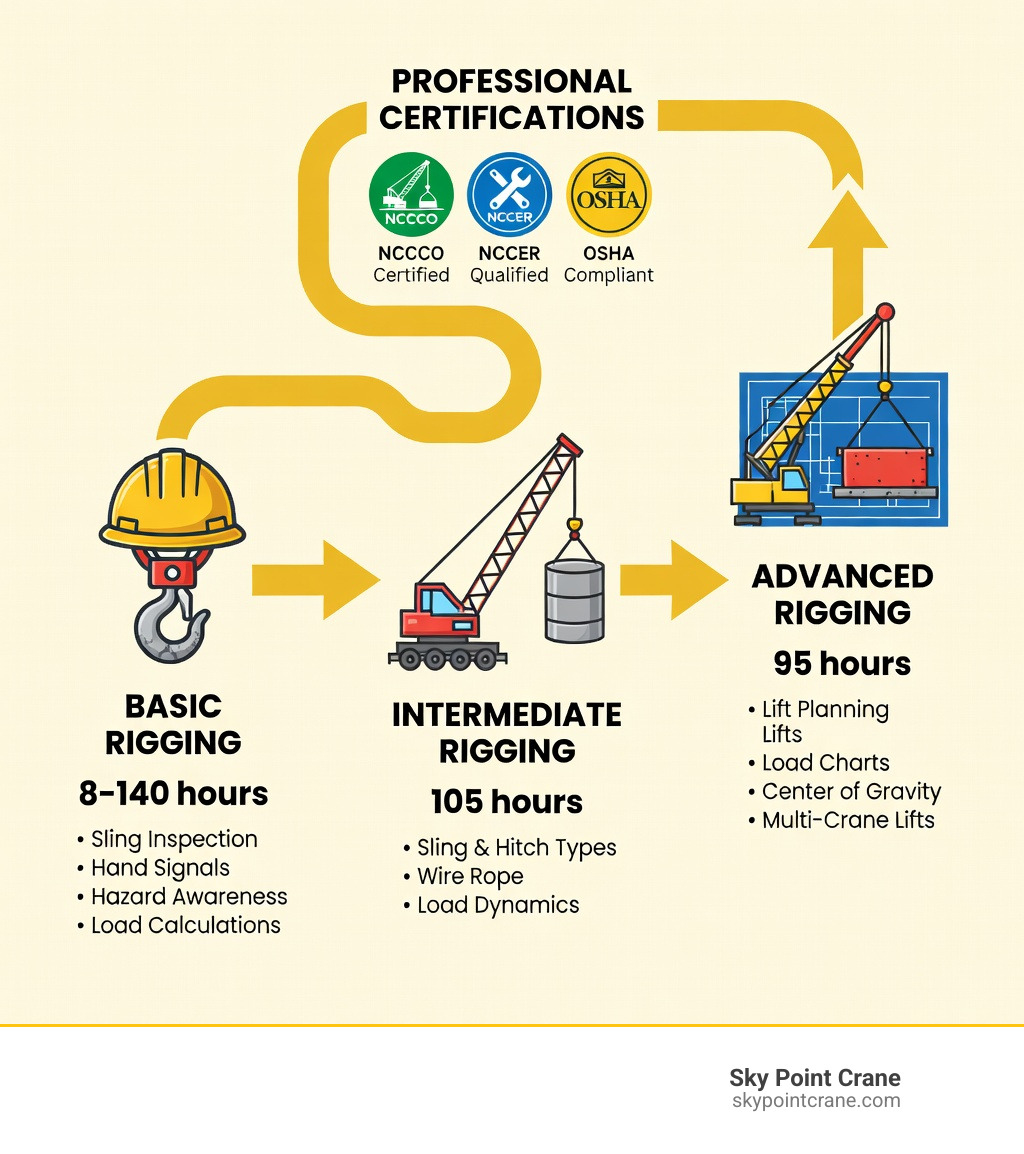
Why Crane Rigging Training is Essential for Modern Job Sites
In our neck of the woods—from the steel city of Pittsburgh to the industrial hubs of Ohio and West Virginia—safety isn’t just a suggestion; it’s the law. Federal OSHA standards are very clear about the necessity of qualified personnel. Without proper crane rigging training, a job site is a liability waiting to happen.
OSHA 29 CFR 1926.1401 requires that riggers be “qualified,” meaning they possess a recognized degree, certificate, or professional standing, or have demonstrated the ability to solve problems related to rigging. When we talk about Fed OSHA Certifications, we are looking at a framework designed to prevent the “big three” of rigging disasters: dropped loads, equipment failure, and electrical contact.
Beyond the legalities, there is the massive financial risk. A single dropped load can cause hundreds of thousands of dollars in property damage. Even worse, rigging failures often lead to catastrophic injuries. By prioritizing crane-and-rigging-safety, we protect our most valuable asset—our people. Training ensures that every person on-site can identify a hazard before it becomes a headline.
Core Components of Crane Rigging Training
What actually happens inside a crane rigging training program? It isn’t just sitting in a classroom looking at pictures of cranes. It’s a deep dive into the mechanics of tension and gravity.
Key topics include:
- Sling Inspections: Learning how to spot a “retired” sling. Whether it’s a bird-caged wire rope or a torn nylon web sling, riggers must know exactly when a piece of gear is no longer safe to use.
- Load Calculations: Rigging is math in motion. Trainees learn to determine the weight of the load and how that weight shifts during a lift.
- Hitch Applications: Not every load is hitched the same way. Training covers vertical, choker, and basket hitches, and how each affects the sling’s capacity.
- Hardware Selection: Choosing the right shackle, eyebolt, or spreader bar for the job.
- Signal Person Training: Clear communication is vital. This is why rigging-signal-persons are often trained alongside riggers to ensure the operator and the ground crew are speaking the same visual language.
Essential Hand Signals for Riggers
If you can’t talk to the operator, you can’t move the load. In crane operations, hand signals are the universal language. Most reputable programs follow CSA or ASME standards to ensure consistency across different job sites.
During crane rigging training, the evaluation for hand signals is incredibly strict. In many high-quality programs, you don’t just “pass”—you have to be perfect. It is common for programs to require a 100% passing grade for hand signals because a misunderstood signal can lead to a collision or a dropped load in a split second. This level of precision is part of the-importance-of-certified-riggers-in-todays-construction-industry, where there is zero room for error.
Navigating the Levels of Rigging Certification
Not all riggers are at the same level, and their training reflects that. Think of it like a belt system in martial arts—you have to master the basics before you can handle the heavy-duty stuff.
| Level | Focus Areas | Recommended Training Hours |
|---|---|---|
| Basic (Level 1) | Sling types, basic hitches, hand signals, hardware inspection, and safety principles. | 8 to 140 Hours |
| Intermediate (Level 2) | Load dynamics, wire rope, telescopic and lattice boom setup, and sling stress calculations. | 105 Hours |
| Advanced (Level 3) | Lift planning, multi-crane lifts, load charts, and center of gravity for complex loads. | 95 Hours |
Using a structured understanding-nccco-certification-what-it-means-for-the-construction-industry approach allows workers to advance their careers while ensuring they have the skill mastery required for each step. The NCCER curriculum is a gold standard here, providing a clear path from a green apprentice to a master rigger.
Advanced Crane Rigging Training and Lift Planning
Once you move into advanced territory, the training shifts from “how to tie a knot” to “how to engineer a lift.” This is where 3D-lift-planning comes into play. Advanced riggers must understand:
- Load Charts: Interpreting the crane’s capacity based on boom angle, length, and radius.
- Center of Gravity: If you don’t find the balance point, the load will shift as soon as it leaves the ground.
- Sling Tension: Calculating how the angle of the sling increases the actual tension on the gear (the “sling angle factor”).
- SWL (Safe Working Loads): Ensuring every component in the rigging assembly is rated for the weight it will carry.
- Capacity Deductions: Accounting for the weight of the block, the ball, and the rigging itself, which all “count” against the crane’s total capacity.
Prerequisites for Entry-Level Trainees
You don’t need a PhD to start crane rigging training, but you do need a solid foundation. Most basic rigging courses have no formal prerequisites, but you’ll have a much easier time if you come prepared with:
- Basic Math Skills: You’ll be doing a lot of addition and multiplication for weight and tension.
- A Good Calculator: Many in-person courses, like those in the IHSA framework, require you to bring your own calculator.
- Physical Readiness: Rigging is a physical job. You need to be able to move hardware and work in various weather conditions.
- A Safety Mindset: This is the most important “tool” in your box. You have to be willing to stop a lift if something doesn’t look right.
Preparing for crane-operator-training often starts with these rigging basics, as every great operator needs to understand what’s happening at the end of their hook.
Choosing the Right Training Format: Online vs. In-Person
The way we learn rigging has changed. While nothing beats getting your hands on a shackle, digital tools are making training more accessible than ever.
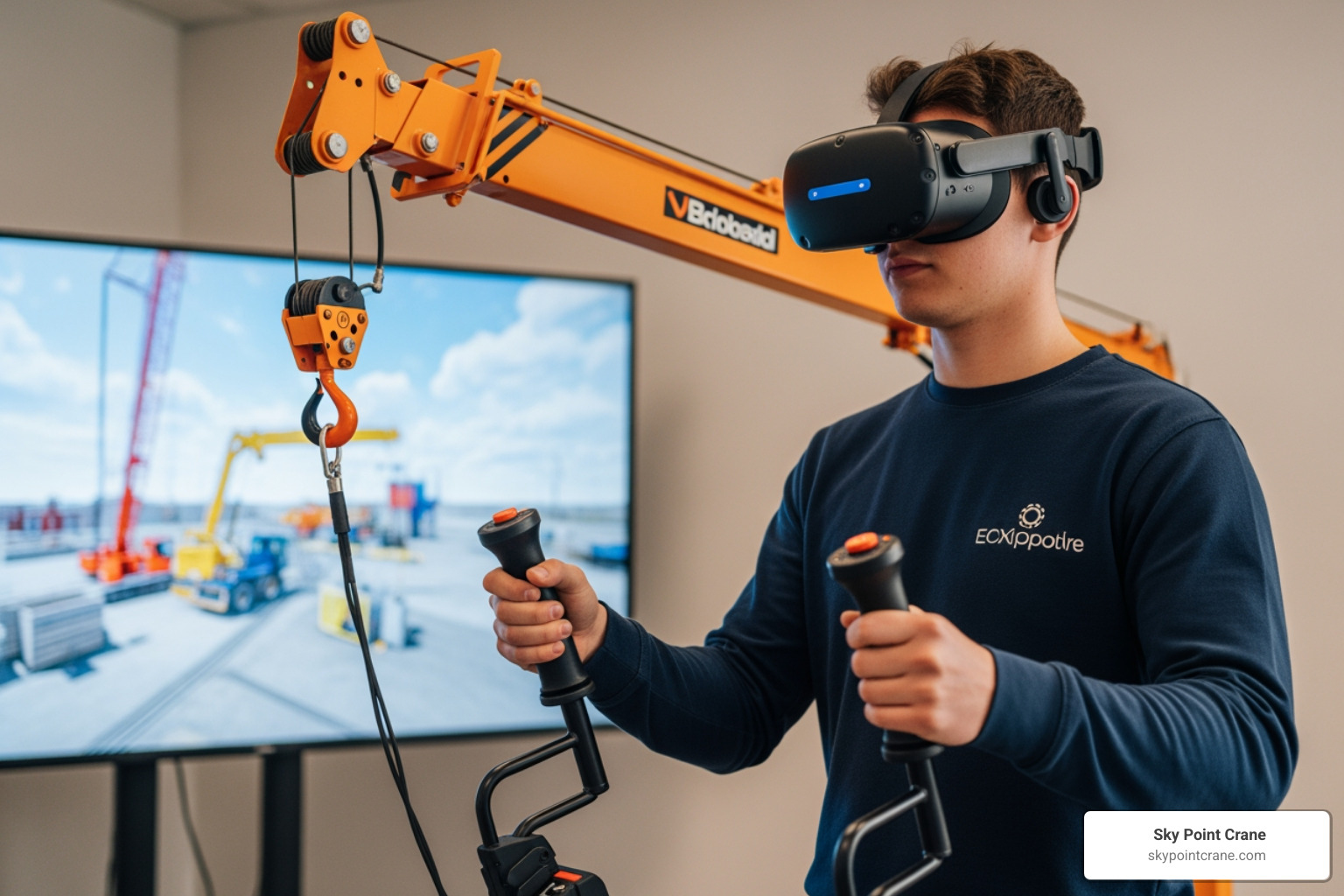
- Online Training: Great for theory, hazard recognition, and “digital badging.” It’s flexible and allows workers to learn at their own pace.
- In-Person Training: Essential for hands-on skills like knot tying and sling inspection. It provides immediate instructor feedback.
- VR Simulations: Programs like the Demo VR Crane Training allow trainees to practice “scary” scenarios—like high winds or mechanical failure—in a 100% safe environment.
- Blended Learning: This is often the most effective route. You do the “book work” online and then show up for a two-day practical workshop to prove you can actually do the job.
Benefits of In-Person Practical Evaluations
You can watch a hundred videos on how to tie a bowline knot, but you don’t really know it until you’ve done it with cold hands on a windy Tuesday. In-person evaluations provide a “performance review” that online courses simply can’t replicate.
Instructors can watch how a student handles hardware and correct poor habits before they become dangerous. This hands-on verification is why-every-project-manager-should-consider-certified-riggers-for-efficient-operations. When a rigger is certified through a practical exam, you know they can perform under pressure.
Online Theory and Digital Badging
Online modules are fantastic for the “why” behind the “how.” They use audio and visual modules to explain complex concepts like sling tension and OSHA regulations. Many modern programs now offer digital badging or mobile-accessible certifications. This means a rigger can show their credentials on their smartphone the moment they walk onto a job site in Maryland or Central Pennsylvania. It’s a fast, verifiable way to prove they’ve completed the necessary crane rigging training.
Frequently Asked Questions about Rigging
How long does crane rigging training typically last?
It depends on the level. A foundational “Rigging Level 1” workshop is usually an 8-hour day (6 hours of theory and 2 hours of practical). However, a full NCCER Basic Rigger curriculum can take up to 140 hours. Most “refresher” or safety-focused courses for active workers are 1 to 2-day programs.
What is the passing score for rigging certification exams?
For most written exams, the minimum passing score is 75%. However, for safety-critical skills, the bar is much higher. Many programs require an 80% on knots and a 100% on hand signals to receive certification.
How often must rigging certifications be renewed?
While OSHA doesn’t set a “one-size-fits-all” expiration date, industry best practices and many insurance providers require recertification every 3 to 5 years. This ensures that riggers stay up to date with changing standards and don’t let their skills get rusty.
Conclusion
Mastering crane rigging training is about more than just checking a box for compliance; it’s about building a culture of excellence and safety. From the initial sling inspection to the final 3D lift plan, every step in the process ensures that the heavy lifting is done with precision rather than luck.
At Sky Point Crane, we live and breathe these standards every day. We provide rigging-services-pennsylvania and support throughout Ohio, West Virginia, and Maryland with a team of NCCCO certified experts. Whether you need a 24/7 crane service or a comprehensive project management solution, we bring the certified expertise to make your project efficient and safe.
Training is the foundation of every successful lift. When your crew is properly trained, you aren’t just moving loads—you’re moving your business forward.
Ready to ensure your next lift is handled by the best? Explore our crane-operator-certification resources or contact us today to see how our certified team can support your job site.