
Your Guide to a More Organized and Efficient Workspace
Industrial cabinets are essential storage solutions designed to organize tools, parts, and equipment in manufacturing facilities, warehouses, and workshops. These heavy-duty storage systems help create safer, more productive workspaces while protecting valuable equipment and materials.
Key Industrial Cabinet Types:
- Storage Cabinets – General-purpose units with adjustable shelves
- Drawer Cabinets – Multi-drawer systems for small parts organization
- Security Cabinets – Lockable units for valuable or sensitive items
- Mobile Cabinets – Rolling units that can be repositioned as needed
- Parts Cabinets – Specialized units with multiple small compartments
Popular Materials:
- Heavy-gauge steel (most durable)
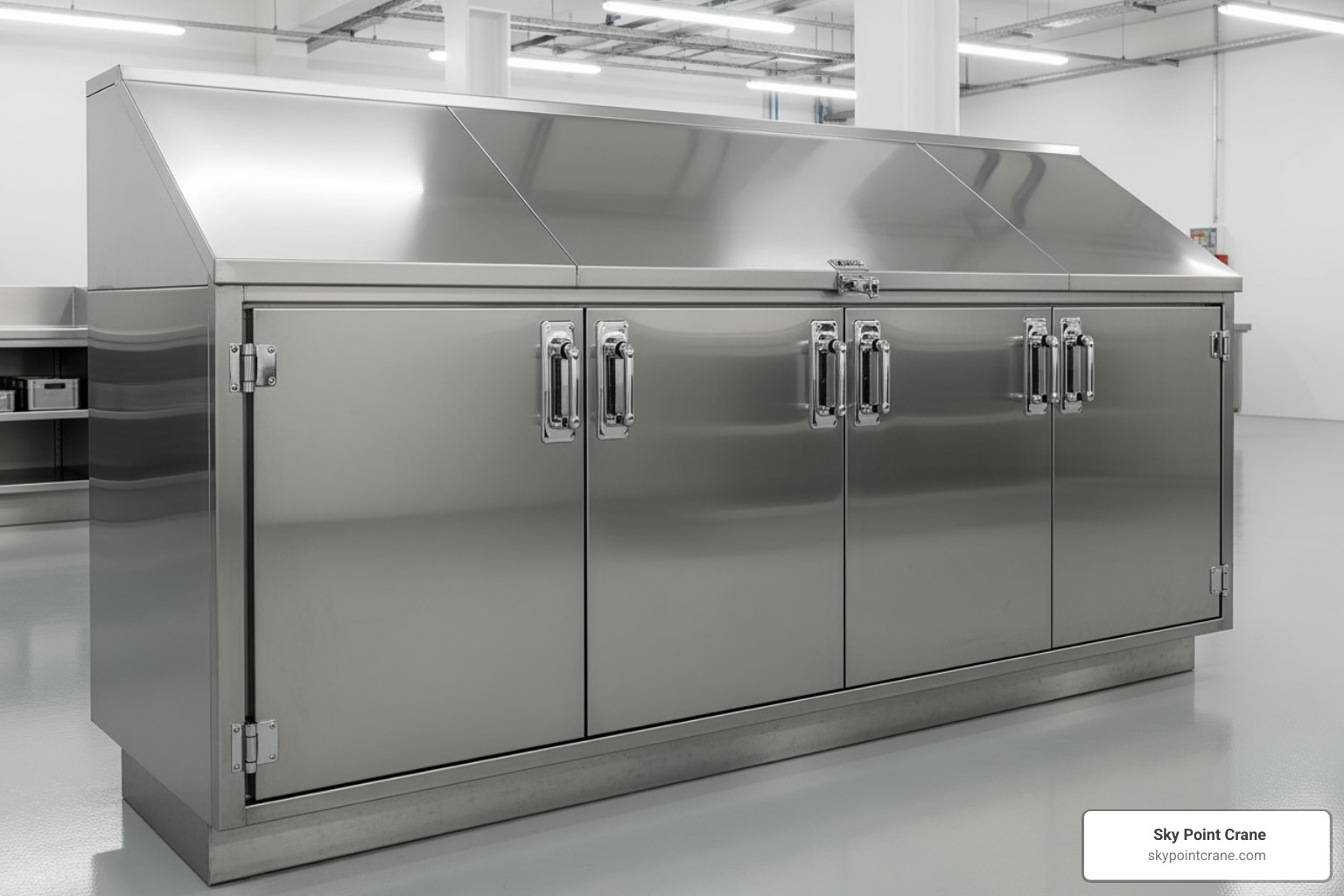
- Stainless steel (corrosion-resistant)
- Powder-coated finishes (scratch-resistant)
Typical Dimensions: Range from counter-high units (36″ x 18″ x 42″) to jumbo heavy-duty cabinets (48″ x 18″ x 78″), with shelf capacities from 150 to 400 pounds.
The right industrial cabinet can transform a cluttered workspace into an organized, efficient operation. As one distributor notes: “Attractive enough for your office, tough enough for the warehouse.”
I’m Dave Brocious, and with over 30 years of experience in manufacturing and industrial operations, I’ve seen how the right storage solutions can dramatically improve workplace efficiency and safety. Through my work with industrial facilities, I’ve learned that choosing the right industrial cabinets is crucial for creating organized, productive work environments.
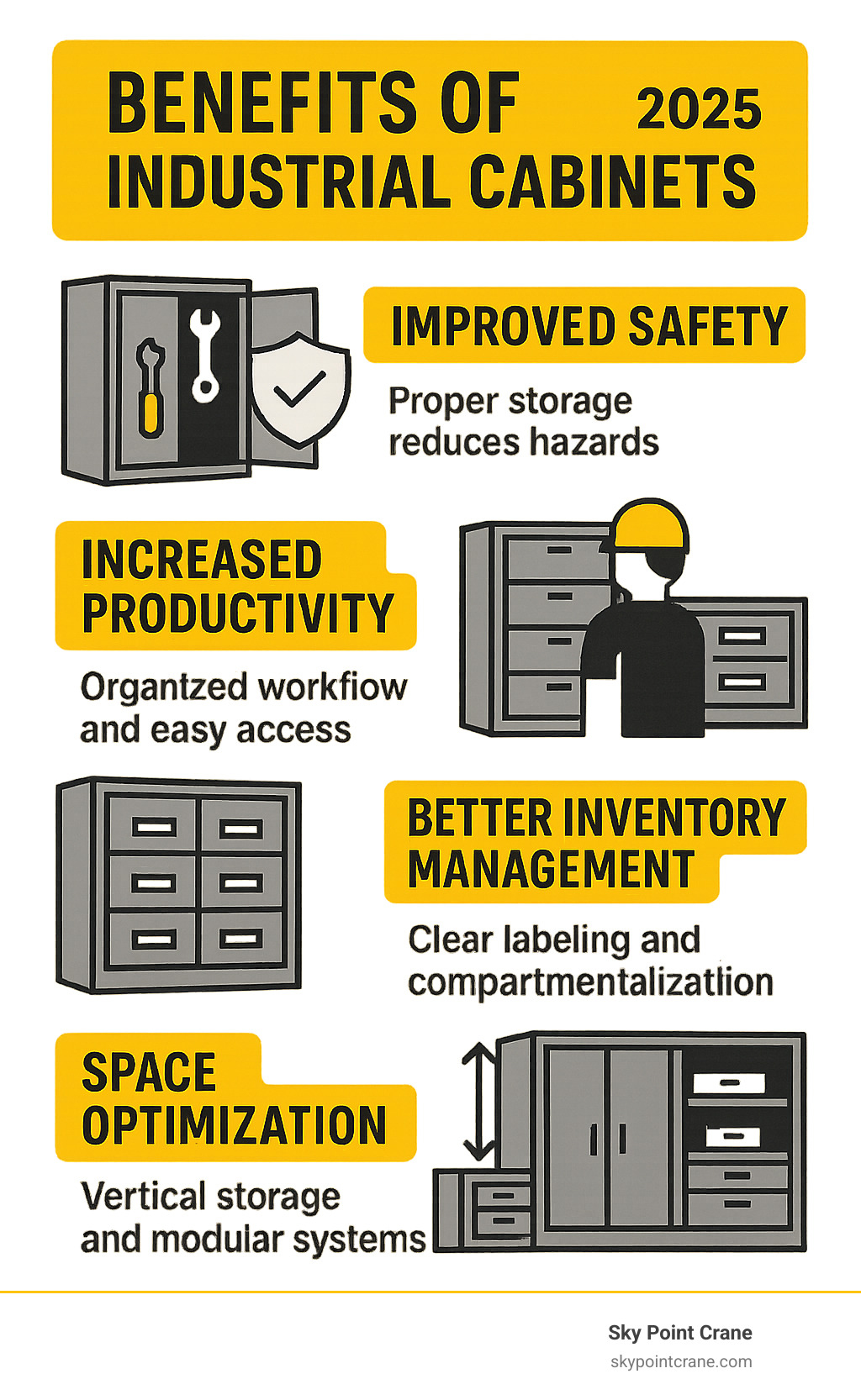
Understanding the Types and Materials of Industrial Cabinets
When you’re working in manufacturing, warehousing, or any industrial setting, you quickly realize that not all storage is created equal. Industrial cabinets are in a league of their own – built tough, designed smart, and ready to handle whatever your workspace throws at them.
Think of these cabinets as the workhorses of storage solutions. While your home kitchen cabinet might wobble under the weight of a few dishes, industrial cabinets are engineered to hold hundreds of pounds per shelf without breaking a sweat. They’re designed to withstand harsh environments, protect valuable equipment, and keep your workspace organized and safe.
The variety of cabinet types and materials available today is impressive. Whether you need to store tiny electronic components or massive tools, there’s an industrial cabinet designed specifically for your needs. For a deeper dive into how industrial storage can transform your operations, explore our industrial storage solutions.
Common Cabinet Designs
Let’s walk through the main types of industrial cabinets you’ll encounter. Each one serves a specific purpose, and understanding these differences will help you choose the right solution for your workspace.
Storage cabinets are your go-to workhorses for general storage needs. These units typically feature adjustable shelves and locking doors, making them perfect for everything from cleaning supplies to bulk tools. You’ll find them in sizes ranging from counter-high units (36″ x 18″ x 42″) all the way up to jumbo heavy-duty versions (48″ x 24″ x 78″) for your biggest storage challenges.
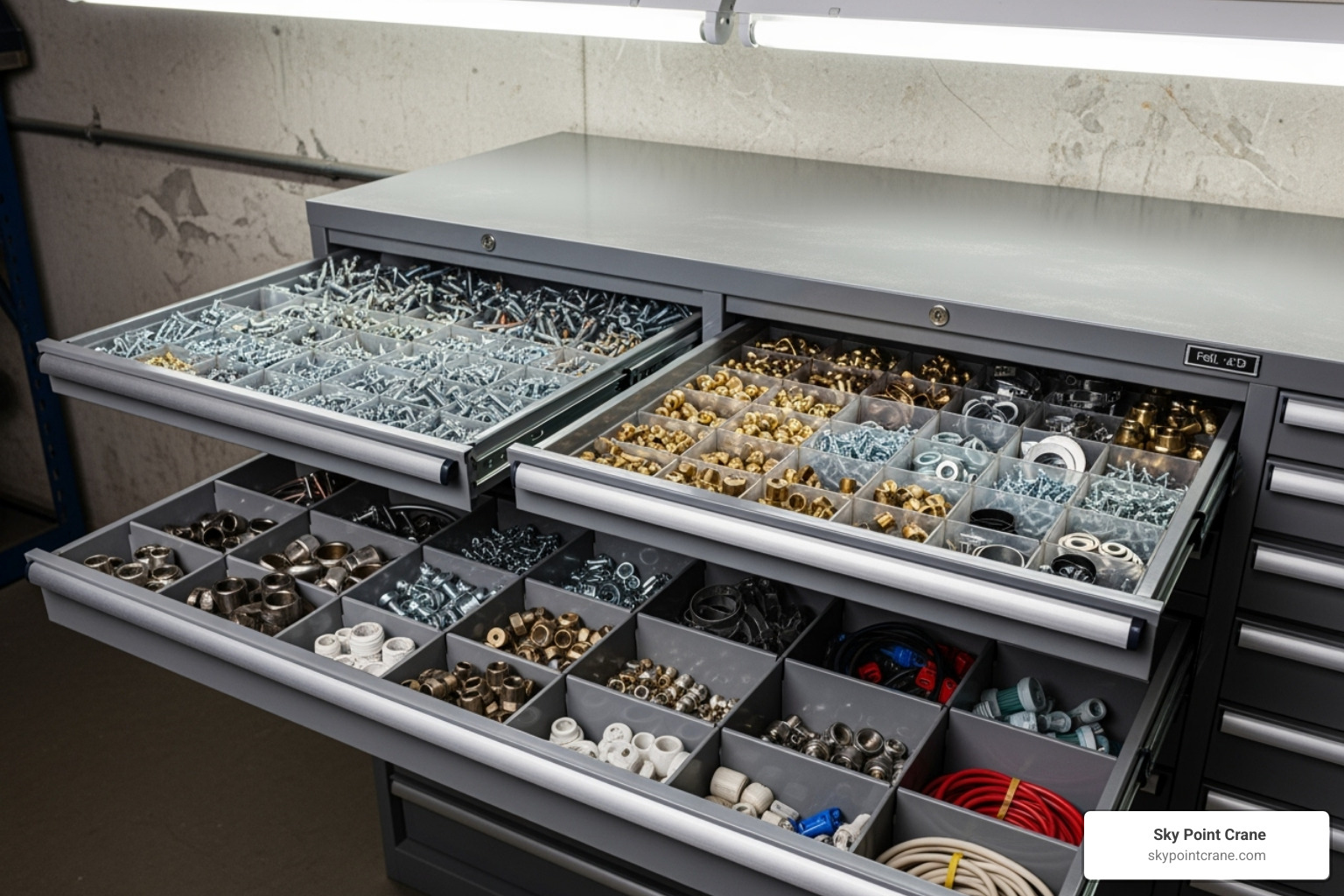
When precision organization matters, drawer cabinets are your best friend. These units shine when you’re dealing with small parts, components, and specialized tools. Each drawer can be customized with dividers and inserts, turning chaos into organized efficiency. It’s amazing how much time you save when every bolt, screw, and widget has its own designated spot.
Mobile cabinets bring flexibility to your storage game. Equipped with heavy-duty casters or designed to work with dollies, these units move where the work is. This mobility makes cleaning easier and allows you to reconfigure your workspace as projects change.
For valuable tools, sensitive documents, or hazardous materials, security cabinets provide the protection you need. These units feature robust locking mechanisms and reinforced construction that deters unauthorized access. Some even include fire-resistant properties for extra protection.
Parts cabinets take small-item organization to the next level. These specialized units often feature multiple small bins or compartments, making them essential for inventory management. Some models include carousel systems for high-density storage in tight spaces.
Combination cabinets offer the best of both worlds, mixing different storage types in one unit. You might find shelving combined with hanging space or a section of drawers – perfect when you need versatility in a single cabinet.
When floor space is precious, wall-mounted cabinets provide excellent vertical storage solutions. They free up valuable floor space while keeping frequently used items within easy reach.
Core Construction Materials
The material your industrial cabinet is made from determines how well it performs and how long it lasts. Let’s look at the most common options and what makes each one special.
Heavy-gauge steel is the champion of industrial storage. This material provides exceptional strength, impact resistance, and security. The “gauge” refers to steel thickness – a lower number means thicker, stronger steel. Most steel cabinets come with powder-coated finishes that resist scratches and protect against rust. As one manufacturer puts it, they’re “attractive enough for your office, tough enough for the warehouse.”
Stainless steel steps up when corrosion resistance and hygiene are critical. This non-porous material is easy to clean and sanitize, making it perfect for food processing, pharmaceutical, and laboratory environments. Many stainless steel units are “washdown rated,” featuring sloped tops and specialized gaskets that keep contents dry even under high-pressure cleaning.
Galvanized steel offers a middle ground, with its zinc coating providing improved corrosion resistance. This material works well when you need rust prevention but don’t require the extreme conditions that full stainless steel handles.
Engineered wood and particle board materials offer more economical solutions for lighter storage needs. While they lack the robust durability of steel, they can work well in less demanding environments or when budget is a primary concern.
Plastic materials like ABS or polyethylene bring advantages like chemical resistance and lighter weight. For specialized applications, plastic can be molded to offer specific protective features that other materials can’t match.
Many modern industrial cabinets combine materials to leverage each one’s strengths. You might find a steel cabinet with a glass door for visibility or plastic components for specialized storage needs.
Choosing the right material isn’t just about durability – it’s about matching your cabinet to your specific environment and needs. The right choice will serve you reliably for years to come.
Key Features to Consider When Selecting Industrial Cabinets
When you’re investing in industrial cabinets, you’re not just buying storage—you’re choosing a system that needs to work hard every single day. After three decades in manufacturing, I’ve learned that the right features can make the difference between a cabinet that serves you well for years and one that becomes a constant headache.
Think of it this way: you wouldn’t buy a truck without checking its towing capacity, right? The same principle applies to industrial storage. Let’s walk through the essential features that separate truly functional industrial cabinets from basic boxes with doors.
For insights into optimizing your indoor storage, check out our page on indoor industrial storage.
Security and Access Control
In industrial environments, security isn’t just about preventing theft—it’s about protecting your investment and keeping dangerous materials away from unauthorized hands. I’ve seen too many facilities learn this lesson the hard way.
Locking doors are your first line of defense and come standard on most quality storage cabinets. But not all locks are created equal. Basic keyed locks work fine for general storage, but when you’re securing valuable equipment or sensitive materials, you need something stronger.
Three-point locking systems are a game-changer for high-security applications. Instead of securing just one point on the door, these systems lock at the top, bottom, and middle. It’s like having three deadbolts instead of one—much harder for anyone with bad intentions to defeat.
Modern technology has brought us smart locks with features like NFC technology and Bluetooth access. Companies like Rousseau offer the L100 Smart Lock, which eliminates the hassle of managing physical keys or remembering complex codes. Your team can access cabinets with their phones or key cards, and you get detailed logs of who accessed what and when.
Reinforced construction matters just as much as the lock itself. Heavy-gauge steel, all-welded designs, and reinforced door frames create a system that’s tough to compromise. Some manufacturers specialize in rugged cabinet options specifically designed to withstand determined attempts at forced entry.
Functionality and Customization
The best industrial cabinets adapt to your needs, not the other way around. Adjustable shelves might seem like a basic feature, but they’re absolutely essential. Your storage needs will change over time, and being able to reconfigure shelf spacing saves you from buying new cabinets every few years.
Pay close attention to shelf capacity—this varies dramatically between models. Standard industrial cabinets typically handle anywhere from 150 to 400 pounds per shelf. Underestimate this, and you’ll end up with sagging shelves or worse, a complete structural failure that could injure someone.
Mobility features like casters and dollies transform static storage into flexible workspace solutions. Being able to roll a cabinet to where the work is happening saves countless steps and makes your team more efficient. Some cabinets come with built-in wheels, while others work with optional dollies.
Modular systems offer incredible flexibility. Companies like Rousseau have built their reputation on modular designs that let you mix and match different cabinet types, drawer configurations, and accessories. You can start small and expand your system as your needs grow.
The ability to customize dimensions means you can maximize every square inch of your facility. Many manufacturers now offer online configurators where you can design your ideal setup, choosing everything from cabinet size to color schemes. You can explore this level of customization through tools like Rousseau’s configurator.
Durability and Load Capacity
Industrial environments are tough on equipment, and your cabinets need to be tougher. All-welded construction creates a stronger, more rigid structure compared to bolted assemblies. While bolted cabinets can work well, welded units handle heavy loads and daily abuse much better.
Steel gauge directly impacts durability—lower gauge numbers mean thicker, stronger steel. A 14-gauge steel cabinet will outlast and outperform a 20-gauge unit every time. It’s worth paying extra upfront for heavier gauge construction.
Weight capacity per shelf isn’t just a number on a spec sheet—it’s a safety requirement. Overloaded shelves don’t just bend or break; they can cause serious injuries. Match your cabinet’s capacity to your actual storage needs, with some margin for safety.
Reinforced corners and doors prevent the warping and sagging that plague cheaper cabinets. Look for units with strengthened door hinges, corner braces, and shelf supports. These details matter when your cabinets are loaded and unloaded dozens of times per day.
Corrosion resistance becomes critical in humid environments or facilities that require frequent washdowns. Stainless steel and high-quality powder-coated finishes protect your investment and maintain professional appearance even in challenging conditions.
These features work together to create storage solutions that improve rather than hinder your operations. The right industrial cabinets become invisible parts of your workflow—always there when you need them, never causing problems or delays.
Matching the Right Cabinet to Your Industrial Needs
When I walk through an industrial facility, I can usually tell within minutes whether they’ve matched their storage to their actual needs. Just like you wouldn’t use a hammer to turn a screw, choosing the wrong industrial cabinets can create more problems than they solve.
The secret to effective industrial storage isn’t just buying cabinets – it’s understanding exactly what you need to store, where you need to store it, and how often you’ll need to access it.
How to Choose the Right Industrial Cabinets for Your Application
Think of this as matching tools to tasks. Each type of storage challenge calls for a specific cabinet solution.
Tool organization works best with standard storage cabinets that have adjustable shelves. These give you the flexibility to store everything from small hand tools to larger power equipment. If your tools are particularly valuable or prone to “walking away,” security cabinets with robust locking systems are worth the investment.
Small parts management is where drawer cabinets really shine. I’ve seen facilities transform their efficiency just by switching from bins on shelves to organized drawer systems. Instead of digging through containers of mixed screws and bolts, workers can find exactly what they need in seconds. Parts cabinets with multiple small compartments make inventory management almost effortless.
For bulk storage needs, you’ll want heavy-duty storage cabinets with higher shelf capacities. These workhorses can handle 400 pounds per shelf and are perfect for storing larger items or high volumes of materials that don’t require frequent access.
Securing valuable equipment demands specialized security cabinets. Any sensitive electronics, testing equipment, or high-value tools should be locked away in cabinets with multi-point locking systems and reinforced construction. It’s a small price to pay for peace of mind.
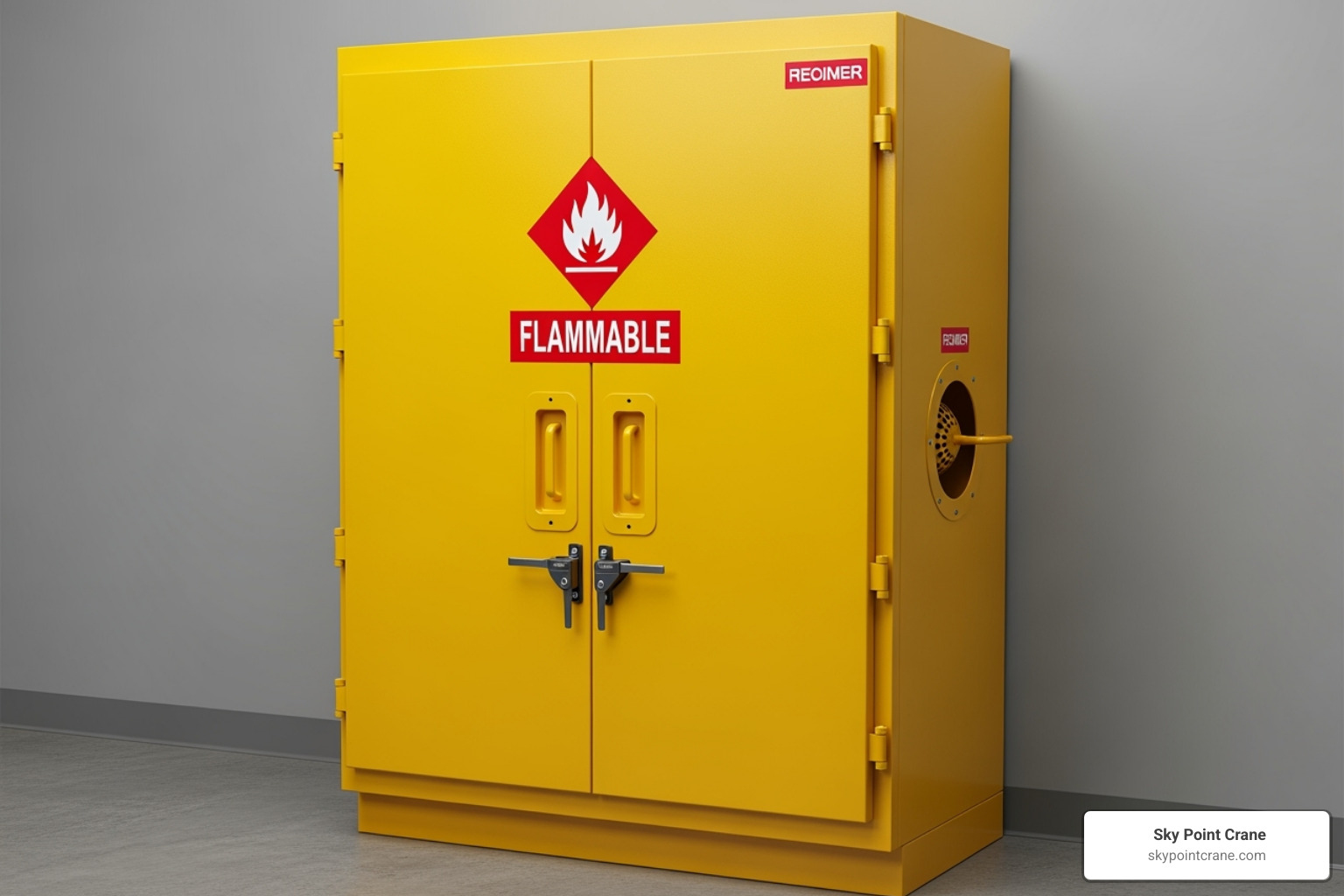
Storing chemicals and hazardous materials requires specialized cabinets designed for safety. These feature fire resistance, spill containment, and proper ventilation. They’re often color-coded – yellow for flammables, for example – making it easy to identify contents at a glance.
In general warehousing environments, the best approach is often a combination of different cabinet types. This creates a flexible system that can handle diverse storage needs while maintaining organization.
For comprehensive solutions that can be custom to your specific industrial requirements, explore our commercial storage solutions.
The Power of Modular and Customizable Systems
I’ve watched companies struggle with rigid storage systems that couldn’t adapt as their needs changed. That’s why modular industrial cabinets are game-changers.
Flexibility is the biggest advantage. When your operations evolve – and they always do – modular systems can evolve with you. You can add components, remove sections, or completely reconfigure the layout without starting from scratch.
Space optimization becomes almost effortless with these systems. They’re engineered to use every inch efficiently, especially vertical space. I’ve seen facilities nearly double their storage capacity by replacing standard shelving with modular drawer systems.
Scalability means you can start small and grow. Add more modules as your business expands, or integrate new types of storage when your needs change. It’s like building with adult-sized building blocks.
Personalized configurations let you design exactly what you need. You can customize dimensions, choose colors that match your facility, and configure internal organization down to the smallest detail. Drawer inserts, dividers, bins, and trays can be arranged to organize even the tiniest components perfectly.
Companies like Rousseau offer online configurators where you can design your ideal system before ordering. You can explore this level of customization at their configure your own cabinet system tool.
Assembled vs. Unassembled Industrial Cabinets
This choice often comes down to time versus money, and both options have their place.
Assembled cabinets arrive ready to work. They’re typically more robust because they use all-welded construction, and you don’t need tools or assembly expertise. The downside? They cost more upfront and can be challenging to move into tight spaces. If you need storage immediately and budget allows, assembled units are usually worth the extra cost.
Unassembled cabinets offer significant cost savings, especially for large orders. They ship in compact packages, reducing freight costs, and they’re easier to move through doorways and into tight spaces. The trade-off is assembly time and the need for proper tools and expertise.
The cost implications extend beyond the purchase price. Assembled units cost more initially but save labor costs. Unassembled units require assembly time but offer lower purchase and shipping costs.
Installation time varies dramatically. Assembled cabinets can be positioned and loaded immediately, while unassembled units might take several hours per cabinet to assemble properly.
In my experience, the choice often depends on your timeline and available labor. For urgent needs, assembled cabinets are lifesavers. For planned installations with adequate time, unassembled units can provide substantial savings that make the extra effort worthwhile.
How Industrial Cabinets Improve Workplace Safety and Organization
When you’ve worked in industrial environments as long as I have, you learn that safety and organization go hand in hand. A cluttered workspace isn’t just inefficient—it’s dangerous. That’s where industrial cabinets become absolute game-changers, changing chaotic work areas into well-organized, safe environments that actually help your team get more done.
At Sky Point Crane, we understand that proper storage isn’t just about keeping things tidy—it’s about creating workspaces where our teams can operate safely and efficiently. For a comprehensive look at our commitment to safety, health, and the environment, please visit our safety, health & environment page.
Creating a Safer, More Organized Environment
I’ve seen how the right industrial cabinets can completely transform a workspace. It’s amazing what happens when everything has its proper place.
Reducing trip hazards is probably the most immediate benefit you’ll notice. Tools scattered across the floor aren’t just annoying—they’re accidents waiting to happen. When you give every tool and piece of equipment a designated home in your cabinets, you eliminate those dangerous obstacles that cause slips, trips, and falls.
Securing hazardous materials becomes much more manageable with specialized safety cabinets. These aren’t your ordinary storage units. They’re designed with fire-resistant construction, self-closing doors, and spill containment sumps to keep dangerous chemicals safely isolated. The bright yellow cabinet in the image above is a perfect example—it’s clearly labeled so everyone knows exactly what’s inside and how to handle it safely.
Your tools and equipment will thank you too. When items are properly stored and protected, they last longer, work better, and don’t mysteriously disappear when you need them most. No more hunting through piles of equipment or dealing with damaged tools that were left lying around.
The real magic happens with your workflow efficiency. When your team knows exactly where everything belongs, they spend less time searching and more time working. This isn’t just about productivity—it’s about reducing frustration and stress on the job site.
There’s also something to be said for accountability. When tools have assigned spots in specific cabinets, people naturally take better care of them and remember to put them back where they belong.
Compliance with safety regulations becomes much easier when you have proper storage systems in place. OSHA requirements for chemical storage, tool organization, and workplace safety are much more manageable when you have the right industrial cabinets doing the heavy lifting.
Essential Accessories to Maximize Functionality
The beauty of modern industrial cabinets is how you can customize them to work exactly the way you need them to. The right accessories can turn a good storage solution into an exceptional one.
Additional shelves let you maximize every inch of vertical space. Most cabinets come with a standard configuration, but being able to add more shelves means you can adapt the storage to fit your specific needs perfectly.
Dollies transform stationary cabinets into mobile workstations. This flexibility is incredibly valuable when you need to move tools to different work areas or simply want to clean underneath your cabinets more easily.
For smaller items, drawer dividers and inserts are absolute lifesavers. They keep screws, bolts, and small parts from becoming a jumbled mess in your drawers. Each item gets its own dedicated spot, making inventory management much simpler.
Clear labeling systems with proper label holders eliminate guesswork entirely. When everything is clearly marked, anyone on your team can quickly find what they need and put it back in the right place.
Specialized bins and trays that fit perfectly within your shelves and drawers add another layer of organization. They can be easily removed and carried to work areas, then returned to their exact spot when the job is done.
Some cabinet systems even integrate workbench tops, creating complete workstations that combine storage and work surface in one efficient package.
These accessories might seem like small details, but they make the difference between storage that just holds your stuff and storage that actively improves how your team works. When every tool has its place and every place is clearly marked and easily accessible, you create an environment where safety and efficiency naturally follow.
Conclusion: Investing in the Right Storage for Long-Term Value
After three decades in industrial operations, I’ve learned that the right storage solution is never just about today’s needs—it’s about building a foundation that grows with your business. Choosing the right industrial cabinets is truly a crucial step in creating a safer, more productive, and organized workspace that serves you well into the future.
The beauty of quality industrial cabinets lies in their adaptability. When you invest in modular systems with adjustable shelves, robust construction, and customizable features, you’re not just solving today’s storage challenges. You’re creating a system that can evolve as your operations change, expand, or pivot in new directions.
By carefully considering the materials—whether that’s heavy-gauge steel for maximum durability, stainless steel for washdown environments, or specialized coatings for corrosion resistance—you ensure your investment withstands the test of time. The features you choose, from three-point locking systems to mobile casters, directly impact how well your storage solution integrates into daily workflows.
Most importantly, matching your cabinet selection to specific applications makes all the difference. Whether you need secure storage for valuable tools, organized compartments for small parts, or specialized cabinets for hazardous materials, the right choice pays dividends in safety, efficiency, and peace of mind.
For complex industrial environments where efficiency and safety are paramount, having the right infrastructure is absolutely key. At Sky Point Crane, we understand the demands of industrial sites and the critical importance of well-managed equipment and organized spaces. When every lift, every project, and every day depends on having the right tools accessible and secure, quality storage becomes essential infrastructure.
The investment you make in proper industrial cabinets today creates value that compounds over time—through reduced downtime, improved safety records, better inventory management, and the simple satisfaction of a workspace that actually works for you instead of against you.
Ready to optimize your facility’s storage and organization? Explore our industrial storage solutions to learn more about creating the efficient, safe workspace your operations deserve.