
What Does It Cost to Rent a Crane in Pennsylvania?
Wondering what a crane costs? It comes down to the machine, the hours and the site. Below is how we build the number, with real ranges for common jobs. Sky Point Crane serves Western Pennsylvania, Ohio, West Virginia and Maryland, and we quote every job before it runs.
On this page|The short answer | What drives the price | Typical job costs | What is included | What to ask
The short answer
Most crane work in our area starts around $1,500 for a single-day lift and runs to $50,000 or more for a project measured in weeks or months. That is a deliberately wide range, and the honest reason is duration: “renting a crane” covers everything from a one-day hot tub set to a months-long project scope with permits and counterweight trucking.
How long the crane is on your site is the single biggest thing that moves the number — more than what is being lifted.
Here is the part most people are surprised by: for a straightforward single lift, the minimum charge usually sets the price rather than what you are lifting. A roof truss, a rooftop air-conditioning unit and a tree-removal assist often cost the same, because all three fit inside the minimum. Price separates when the job needs a larger machine, more than one day, or permits and mobilization.
What follows is how the number is actually built, so you can work out roughly where your job sits before you call.
What actually drives the price
Hours, and how they are counted
Crane time is billed portal to portal — the clock starts when the machine leaves our yard and stops when it returns. Travel is part of the job, not an extra, which is why two otherwise identical lifts can carry different totals depending on where they are.
Minimum hours
Smaller boom trucks carry a five-hour minimum. Larger cranes carry an eight-hour minimum. In practice, a one-hour lift and a four-hour lift usually cost the same, so it is worth grouping several small picks into one visit where the schedule allows.
The machine
A stand-up boom truck and a 225-ton all-terrain are different orders of cost. Capacity is driven by weight, radius and height — the further out and the higher up you need to reach, the bigger the machine has to be. This is the part most people get wrong: the rating on the side of a crane is what it will lift close in, not what it will lift at the radius your job actually needs. A load well inside a machine’s headline capacity can still call for the next size up once the boom has to reach over a building.

Access and ground conditions
Where the crane can physically stand changes everything downstream. Tight sites, soft ground, buried services and overhead lines all push the machine farther from the load, and a longer reach means more capacity, more counterweight and sometimes matting. Describing the approach and the standing area is often more useful to us than the weight on its own.
Mobilization
Large cranes need counterweight trucking and permits to reach the site. That is a separate per-job charge, and on the biggest machines it can be significant. It is also why the size of the machine matters to the total as much as the length of the job — it has to get there either way.
Overtime
Work past eight hours in a day moves to premium time. So do Saturdays. If your schedule is tight, say so early, because the sequence of the work changes the number.
Prevailing wage
Public and publicly funded work is billed at prevailing wage rates, which are higher. If your project is government-funded, say so when you call — it changes the quote.
Fuel and rigging
A fuel surcharge is applied as a percentage of the pre-tax total. Jobs requiring rigging gear carry a per-job rigging charge.
How we quote: tell us the weight, the radius and what the site looks like, and we will tell you the machine and the hours it needs. Everything above is what turns those three facts into a number.
What typical jobs cost
These are all-in ranges by scenario, grouped by how long the crane is on site — because duration, not the object, is what moves the number.
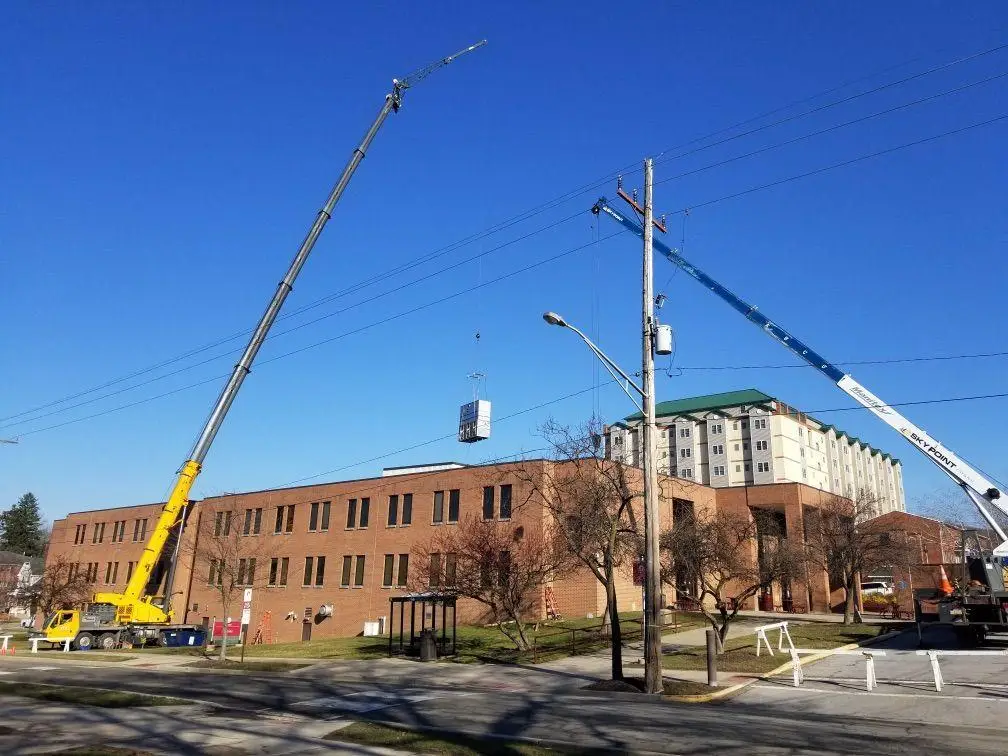
- Single-day lift — a hot tub or spa set, a tree-removal assist, a roof truss or beam set, or a single rooftop HVAC unit: from about $1,500. These bill alike because the day is what you are buying, not the object.
- Multi-unit or multi-day work — several HVAC units, a larger machine, or work spanning more than one day: $2,500 to $6,000 and up.
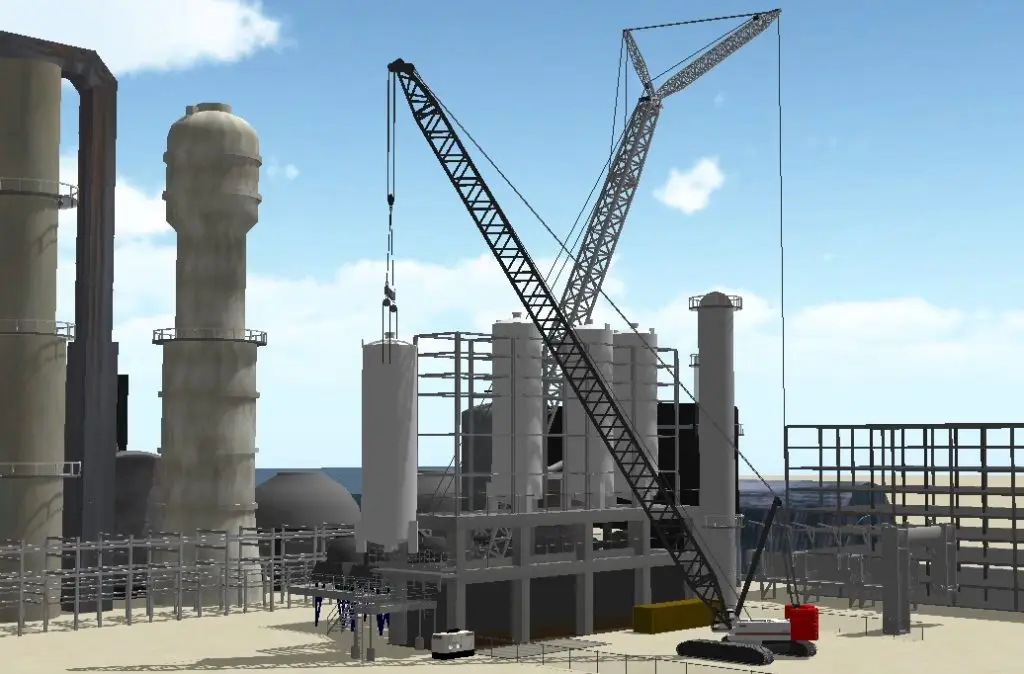
- Project scope — industrial, tower or plant work running days, weeks or months, with mobilization and permits: $6,000 to $50,000.
These are typical ranges from real jobs, not a price list. Access, ground conditions, permits, prevailing wage and lift-plan requirements all move the number.
What is included in the rate
Every Sky Point crane comes with an NCCCO-certified, Pennsylvania-licensed operator. Insurance is carried. On complex lifts we produce a 3D lift plan before anyone arrives on site.
Charged separately: mobilization on larger machines, fuel surcharge, rigging gear, permits where required, and premium time past eight hours.
What to ask before you book a crane
- Is the operator NCCCO certified and state licensed?
- Is a lift plan included for complex work, or extra?
- Who carries the insurance, and for how much?
- Is travel billed portal to portal, or from arrival on site?
- What is the minimum, and what triggers premium time?
A lower hourly rate with an uncertified operator and no lift plan is not cheaper. It is a different service, and the difference shows up when something goes wrong.
Get a real number for your job
Tell us what you are lifting, where it is, and when. We will give you a firm quote — usually the same day. If you are not sure which machine the job needs, that is what we are for: see crane services, boom truck rental or crane rental.
Or call the main line at (724) 471-5710.