From Turbines to Boilers: A Guide to Cranes in Power Plants
Why Cranes used in Power Plants Are Essential to America’s Energy Infrastructure
Cranes used in Power Plants are the backbone of America’s energy infrastructure. Every time you flip a light switch, there’s an invisible network of heavy lifting equipment that made it possible. From the initial construction of towering cooling towers to the precision maintenance of massive turbines, cranes handle the heaviest, most critical components that keep our power grid running 24/7.
Key Applications of Cranes in Power Plants:
- Construction Phase – Installing turbines, generators, boilers, and structural steel for new facilities
- Maintenance & Outages – Removing and replacing turbine rotors, transformers, and boiler components (often 300+ tons)
- Modernization – Upgrading aging equipment to improve efficiency and extend plant life
- Decommissioning – Carefully dismantling structures and removing heavy equipment for repurposing
- Specialized Operations – Handling nuclear reactor vessels, bulk material unloading, and emergency repairs
Power plants demand 100% reliability, safety, and accuracy from their lifting operations. A crane breakdown during a planned outage can cost hundreds of thousands of dollars per day in lost revenue and disrupt power delivery to thousands of homes and businesses. The stakes are incredibly high.
Different power generation facilities require specialized crane solutions. Thermal plants need boiler room and turbine hall cranes that can handle components up to 1,000 tons with millimeter precision. Nuclear facilities demand polar cranes with single-failure-proof engineering and seismic durability. Hydroelectric and renewable energy projects combine massive scale with environmental sensitivity, requiring cranes that can work in remote locations or hundreds of feet in the air.
Whether it’s a 500-ton crawler crane positioning a reactor vessel or a mobile crane performing emergency transformer replacement during an outage, the right equipment and expertise make the difference between success and catastrophic failure.
I’m Dave Brocious, and with over 30 years of experience in the energy industry, I’ve seen how critical Cranes used in Power Plants are to keeping America’s lights on. At Sky Point Crane, we’ve built our reputation on delivering the precision, safety, and reliability that power generation demands at every stage of a facility’s lifecycle.
The Crane’s Role Across the Power Plant Lifecycle
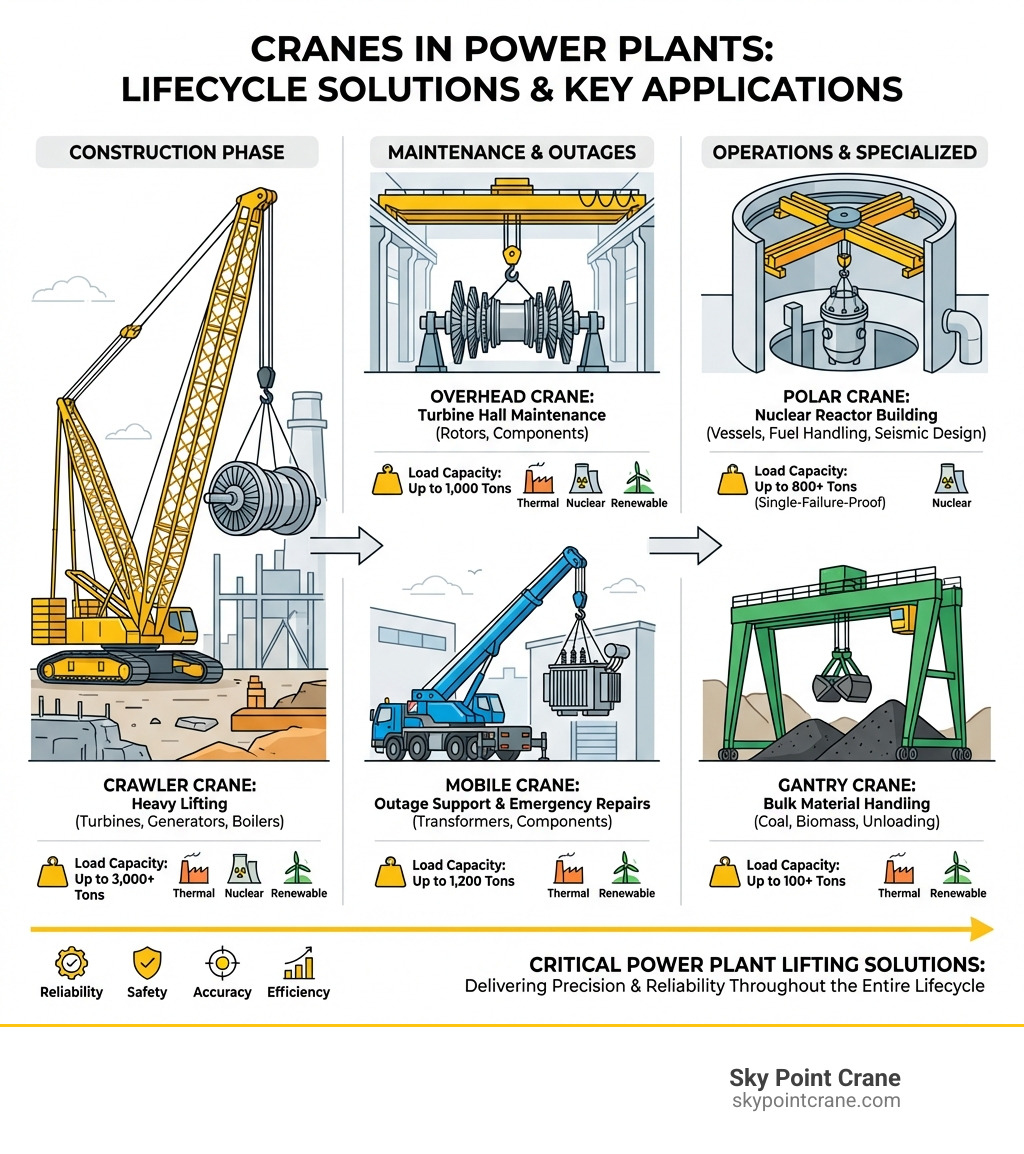
The journey of a power plant, from its initial blueprint to its eventual retirement, is a complex ballet of engineering, construction, and meticulous maintenance. Throughout this entire lifecycle, Cranes used in Power Plants are not just tools; they are the unsung heroes, indispensable for every major step. Our expertise ensures that these vital operations are carried out with the utmost precision and safety. We understand that power plants demand 100% reliability, safety, and accuracy from their lifting operations, and we are committed to upholding that standard. For comprehensive lifting solutions custom to the power generation industry, explore our Crane Services for Power Generation & Power Plants.
From Groundbreaking to Going Online: Construction
The construction phase of any power plant, whether it’s a new natural gas facility in Western Pennsylvania or a solar farm in Ohio, is where Cranes used in Power Plants truly shine. This is when the largest, heaviest, and often most delicate components are first brought to life. We’re talking about the installation of massive turbines, the precise placement of generators, the intricate erection of boiler sections, and the towering construction of cooling towers.
Imagine lifting a boiler section that can weigh upwards of 335 tons or a complete turbine that can be several hundred tons. Our cranes are designed to handle components up to 1,000 tons with millimetric precision, ensuring that every piece fits perfectly into its designated spot. This phase also involves the assembly of structural steel, forming the very backbone of the facility. Without powerful, reliable cranes, these colossal structures simply couldn’t be built. We also provide specialized services for electrical infrastructure, which you can learn more about at Crane Use in the Construction of Electrical Transmission Lines.
Keeping the Lights On: Maintenance and Modernization
Once a power plant is operational, the work of cranes doesn’t stop. In fact, it becomes even more critical. Power plants operate on tight schedules, and planned outages for maintenance and modernization are carefully timed to minimize disruption to the grid. Every hour counts, and cranes often work around the clock during these outages to get the plant back online quickly.
Tasks during this phase are diverse and demanding. They include turbine disassembly and rotor removal, which often involves handling extremely heavy or irreplaceable components, like a 335-ton turbine rotor, with pinpoint accuracy. Boiler re-tubing requires maneuvering heavy steel components through tight spaces, a task that demands both power and finesse. Transformer core replacement, often an emergency repair, also falls under our purview. Beyond repairs, we facilitate the modernization and upgrading of existing power plant infrastructure, removing outdated equipment and installing new, more efficient technology. Our goal is to minimize downtime and ensure lifting operations stay on schedule, because if a crane breaks during a planned outage, it creates a major problem for the power grid. For all your heavy lifting needs, explore our Industrial Heavy Lifting solutions.
The Final Stage: Decommissioning and Site Repurposing
Even when a power plant reaches the end of its operational life, Cranes used in Power Plants play a crucial role in its graceful exit. Decommissioning isn’t just about demolition; it involves carefully dismantling structures and removing heavy equipment so valuable components can be repurposed or safely disposed of. This requires the same level of precision and planning as construction, often in reverse.
Site remediation is the final step, preparing the land for new uses. This can mean converting the site for new power generation, like the Crane Clean Energy Center, which transformed an old site into a modern, clean energy facility. Our cranes ensure that this process is handled efficiently and safely, paving the way for future development.
The Essential Guide to Cranes used in Power Plants
The world of power generation is incredibly diverse, encompassing everything from the roaring furnaces of thermal plants to the silent, immense structures of nuclear facilities and the soaring heights of wind farms. Each type of power plant presents its own unique set of challenges and demands specific types of Cranes used in Power Plants. Whether it’s contending with harsh environments like extreme temperatures, dust, and humidity, or lifting components that require millimeter precision, selecting the right crane for the job is paramount.
Thermal, Natural Gas, and Coal Facilities
Thermal power plants, whether fueled by coal or natural gas, are environments of intense heat and dust. These conditions require robust and reliable lifting solutions.
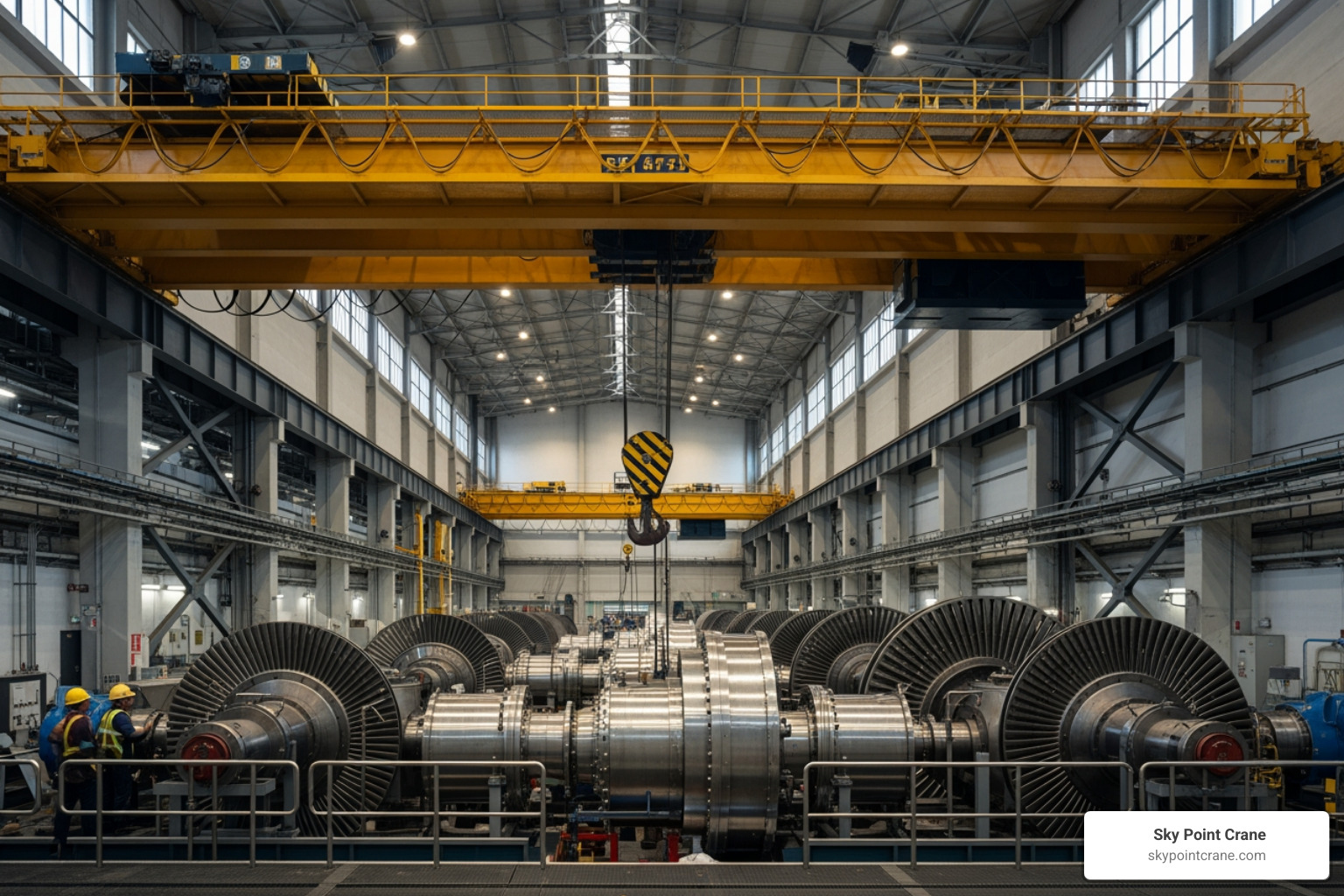
- Boiler Room and Turbine Hall Cranes: These are the workhorses, handling components up to 1,000 tons with millimeter precision during construction, maintenance, and modernization. They are typically large overhead or gantry cranes designed for continuous, heavy-duty operation.
- Bulk Material Handlers: For coal and natural gas plants, specialized cranes with massive clamshell buckets are essential for unloading fuel. Some can unload 1,300 tons of limestone or petcoke per hour from barges and rail cars. These are often large gantry cranes or mobile harbor cranes.
- Mobile Cranes: During maintenance outages, versatile mobile cranes are invaluable. They can quickly move around the site to assist with various tasks, from replacing smaller components to assisting with larger lifts, making them problem-solvers for unexpected needs.
Our expertise extends to all these applications, ensuring that natural gas plants in our service areas of Pennsylvania, Ohio, West Virginia, and Maryland operate smoothly. Learn more about our specialized services for these facilities at Crane Use in Natural Gas Power Plants.
The Unique Demands of Nuclear Power Plants
Nuclear facilities are in a league of their own when it comes to safety and precision. Here, there is absolute perfection and zero margin for error. The lifting of critical components requires specialized Cranes used in Power Plants with unique features.
- Polar Cranes: These are specialized machines mounted on circular runways inside containment buildings. They are designed for fuel assembly, reactor vessel placement, and maintenance within the reactor building. A key feature of polar cranes is “single-failure-proof” engineering, meaning no single component failure can lead to a dropped load.
- Seismic Durability and Fail-Safe Controls: These are non-negotiable for nuclear plant cranes. They must withstand potential seismic events and have redundant systems to ensure operation even if one system fails.
- Crawler Cranes: For the initial construction and major component installation, massive crawler cranes are often used. We’ve seen 500-ton crawler cranes positioning reactor vessels, and even larger ones like the LR 11350 can erect pre-formed ring liners with diameters of around 50 meters and weights of approximately 170 tons during reactor block construction.
The meticulous planning and execution required for nuclear power plant lifts underscore the critical need for experienced and certified crane operators and rigging teams.
Hydroelectric and Renewable Energy Projects
Hydroelectric and renewable energy projects, such as wind and solar farms, combine massive scale with environmental sensitivity, creating unique lifting challenges.
- Intake Gantry Cranes: At hydroelectric facilities, these cranes manage massive water flow gates in wet, corrosive environments. They are crucial for controlling water flow and performing maintenance on the intake structures.
- Powerhouse Overhead Cranes: In remote hydro plants, these cranes are often the only equipment available for servicing large turbines and generators, requiring them to be exceptionally robust and reliable.
- Wind Turbine Nacelle Hoists: For wind farms, specialized compact hoists perform maintenance hundreds of feet in the air, handling components within the nacelle. For larger tasks like drivetrain exchange or rotor removal, powerful all-terrain cranes like the LTM 1750-9.1, with a lifting capacity up to 900 tons and a max hook height of 500 ft, are deployed. These cranes offer faster setup and breakdown times compared to traditional tower or crawler cranes for certain wind power maintenance tasks.
- Solar Panel Installation: While perhaps less intensive than other power plant construction, Cranes used in Power Plants are fundamental for the quick and efficient installation of solar panels and their support structures, enabling projects to meet tight deadlines.
These projects often require cranes that can operate in remote, challenging terrains, such as those found in the mountainous regions of West Virginia or the expansive landscapes of Ohio. The Charles P. Crane Generating Station is an example of a site contributing to our clean energy future, and our services support similar endeavors.
Precision, Safety, and Planning: The Non-Negotiables of Power Plant Lifts
When we talk about Cranes used in Power Plants, we’re not just discussing heavy machinery; we’re talking about operations where precision, safety, and meticulous planning are absolutely non-negotiable. A single mistake can have catastrophic consequences, from widespread power outages to significant financial losses and, most importantly, putting lives at risk. The stability and efficiency of the power grid directly depend on flawless crane operations. This is why we adhere to the highest standards, as outlined in our Reliable Crane Services Guide.
Critical Safety and Regulatory Standards
Safety is our paramount concern. We don’t just meet basic OSHA compliance; we strive for a zero-incident record through meticulous planning and execution. Our safety protocols are non-negotiable.
- NCCCO Certified Operators: Every Sky Point Crane operator holds current NCCCO certification with over 15 years of experience. This ensures that only highly skilled and knowledgeable professionals are at the controls.
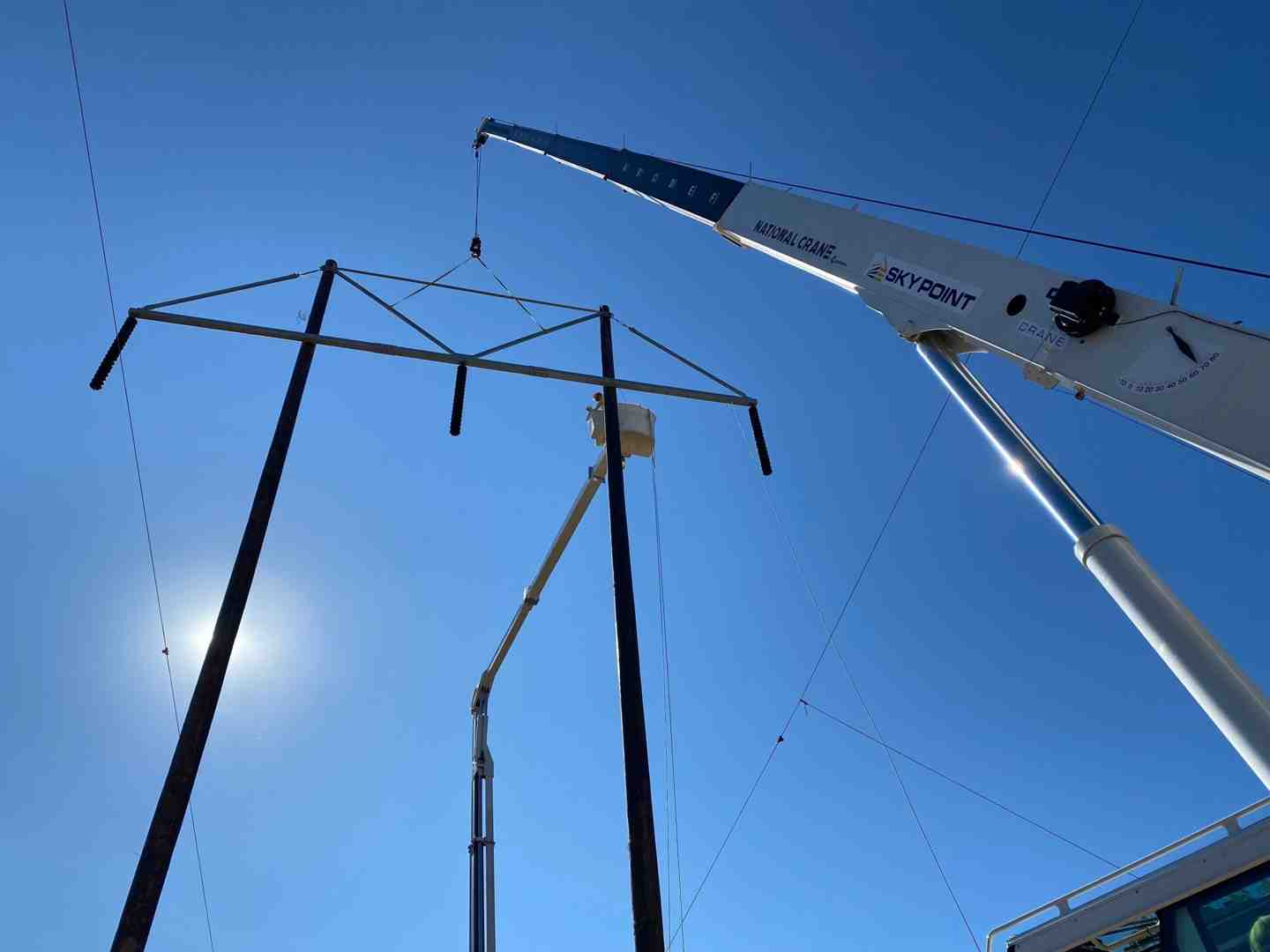
- Load-Bearing Insulators: When operating cranes near live power lines – a common scenario in power plant environments and substations – we use load-bearing insulators on the load line to protect our crews from electrocution.
- Redundant Systems: For critical applications, especially in nuclear power plants, we ensure that cranes are equipped with redundant systems and fail-safe controls to prevent failures.
- Site-Specific Safety Plans: We conduct thorough site assessments and detailed lift plans to identify all potential hazards, including electrical lines, before any operation begins. Coordinating with utilities to de-energize lines when possible is a crucial step.
Our commitment to safety extends to all aspects of our operations, including specialized tasks involving substations and transformers, which you can read more about at Crane Services Substations & Transformers.
The Importance of Expert Rigging and Lift Planning
Expert rigging and lift planning are what separate professionals from amateurs in the power generation industry. This isn’t just about picking up a heavy object; it’s about orchestrating a complex maneuver with precision, often involving unique, multi-million dollar components.
- Advanced 3D Lift Planning Software: We use state-of-the-art 3D lift planning software to simulate every lift before it occurs. This allows us to visualize the operation, identify potential clashes, and optimize crane placement and rigging.
- Comprehensive Load Calculations: Our team performs meticulous load calculations, accounting for not just the weight of the load but also the rigging gear, environmental factors like wind, and dynamic forces that can occur during the lift.
- Custom Rigging Design: For irregularly shaped or delicate components, we create custom rigging designs to ensure the load is secure, balanced, and protected throughout the lift.
- Certified Signalpersons: Critical communication is vital. Our operations always involve certified signalpersons who provide clear, precise guidance to the crane operator, ensuring synchronized movements.
This level of detailed planning avoids costly delays and ensures that critical lifts are executed flawlessly, protecting valuable assets and maintaining tight project timelines.
Key Considerations When Selecting Cranes used for Power Plants
Choosing the right crane for a specific power plant project is a critical decision that impacts safety, efficiency, and cost. We consider a multitude of factors to ensure we provide the optimal solution.
- Load Capacity: This is perhaps the most obvious factor. We need to match the crane’s lifting capacity to the heaviest component that needs to be moved. Our fleet includes heavy-duty cranes capable of lifting massive loads, with some specialized cranes able to handle up to 3,000 tons. Examples include the LR 13000, described as the largest conventional crawler crane in the world, and the LTM 1750-9.1, a 9-axle crane with a lifting capacity up to 900 tons.
- Lifting Height and Radius: The required height and horizontal reach are crucial. For example, the LTM 1750-9.1 is capable of a max hook height of 500 ft and a max radius of 370 ft, making it suitable for tall structures like cooling towers or wind turbines.
- Site Access and Ground Conditions: The accessibility of the site and the stability of the ground are paramount. Some power plants have limited access, requiring cranes with compact footprints or excellent maneuverability. We conduct thorough ground assessments to ensure safe operation.
- Project Timeline: The duration of the project and the speed at which lifts need to be executed influence crane selection. For long-term projects, a tower crane might be ideal, while for short, intensive outages, mobile cranes offer speed and adaptability.
- Environmental Factors: Harsh conditions like extreme temperatures, high humidity, or dusty environments (common in coal plants) require cranes designed to withstand these elements.
Considering these factors carefully allows us to provide the most effective and efficient heavy-duty crane rental solutions for your power plant projects.
Frequently Asked Questions about Power Plant Cranes
We often get asked about the specifics of Cranes used in Power Plants. Here are some of the most common questions and our expert answers.
What are the most common types of cranes used for power plants?
Power plants require a diverse array of lifting solutions, so no single crane type dominates. Instead, a combination of specialized cranes is typically employed:
- Crawler Cranes: These are the heavy lifters, ideal for major construction jobs like setting reactor vessels or large boiler sections. Their high load capacities (up to 3,000 tons) and mobility on uneven terrain make them indispensable for initial construction and heavy component replacement.
- Overhead and Gantry Cranes: These are the indoor workhorses, found in turbine halls, boiler rooms, and hydro powerhouses. They provide precise, controlled lifts for maintenance, assembly, and material handling, often moving components up to 1,000 tons with millimeter accuracy. Gantry cranes are also used outdoors for bulk material handling or at hydroelectric facilities for intake gates.
- Tower Cranes: Best suited for tall structures like cooling towers or the construction of large solar installations, tower cranes offer exceptional height and reach.
- Mobile Cranes (Hydraulic/Rough Terrain): These versatile problem-solvers are crucial for maintenance outages and general utility work. Their speed of deployment and adaptability make them invaluable for tasks like transformer replacement or assisting with smaller component lifts. The LTM 1750-9.1, for example, is a 9-axle crane with a lifting capacity up to 900 tons, capable of a max hook height of 500 ft.
- Polar Cranes: These are highly specialized cranes found exclusively in nuclear power plants. Mounted on circular runways inside containment buildings, they are designed with single-failure-proof engineering for the absolute precision and safety required for reactor building and maintenance.
Each type serves a distinct purpose, contributing to the overall efficiency and safety of power plant operations.
How do you ensure safety when operating cranes near live power lines?
Operating cranes near live power lines is one of the most hazardous tasks in our industry, and it demands the utmost vigilance and expertise. Our approach to ensuring safety is multi-layered and rigorous:
- Meticulous Lift Planning: Before any operation, we develop a detailed lift plan. This includes a comprehensive site assessment to identify all potential electrical hazards, including the location and voltage of overhead and underground power lines.
- NCCCO Certified Operators with Extensive Experience: All our crane operators are NCCCO certified and possess over 15 years of experience. Their training specifically covers safe operations near power lines, understanding minimum approach distances, and emergency procedures.
- Use of Load-Bearing Insulators: A critical safety measure involves the use of load-bearing insulators on the load line. These devices provide a protective barrier, significantly reducing the risk of electrocution if contact with an energized line were to occur.
- Coordination with Utility Companies: Whenever possible, we coordinate directly with utility companies to de-energize lines in the work area. If de-energizing is not feasible, we implement strict measures such as establishing clear exclusion zones, using spotters, and employing insulated boom guards.
- Zero-Incident Record Goal: Our unwavering commitment is to maintain a zero-incident track record. We never cut corners when it comes to safety, especially when working near energized power sources.
These practices are fundamental to protecting our personnel, our clients’ assets, and the public.
What is a “critical lift” in a power plant context?
In the power plant industry, a “critical lift” refers to a high-stakes operation where a failure would have severe and far-reaching consequences. These lifts demand meticulous planning, exceptional expertise, and often, redundant safety systems. Critical lifts often involve:
- Extremely Heavy or Irreplaceable Components: This could be a 335-ton turbine rotor, a reactor vessel in a nuclear plant, or a massive generator. The sheer weight and value of these components mean that any damage during a lift could result in millions of dollars in losses and extensive delays.
- Unique or Multi-Million Dollar Components: Many parts of a power plant are custom-fabricated and cannot be easily replaced. Lifting these unique components requires precision to avoid costly repairs or manufacturing lead times.
- Complex Maneuvers in Tight Spaces: Sometimes, a critical lift isn’t just about weight but about navigating a component through a confined area, such as steering a transformer core through tight spaces within a substation. This requires unparalleled control and coordination.
- High Financial Stakes: The economic implications of crane reliability and downtime are enormous. Each day of an outage can cost hundreds of thousands in lost revenue. Therefore, any lift that, if failed, would prolong an outage or cause significant damage leading to an outage, is considered critical.
For these reasons, critical lifts require exceptional expertise, comprehensive 3D lift planning, and often involve backup systems and extensive contingency planning to ensure a flawless execution.
Conclusion: Powering America with Safe and Efficient Lifting
As we’ve explored, Cranes used in Power Plants are far more than just pieces of equipment; they are critical components in the intricate machinery that powers our homes, businesses, and communities. From the moment the first shovel breaks ground to the final stages of decommissioning, these powerful machines facilitate every major step, ensuring the construction, maintenance, and modernization of our energy infrastructure.
The economic implications of crane reliability and downtime in power plant operations are immense. Every planned outage is a race against the clock, with each day representing hundreds of thousands of dollars in lost revenue. A reliable, efficient lifting operation is not just a convenience; it’s an economic imperative that directly impacts grid stability and energy costs.
At Sky Point Crane, we understand these stakes. Our commitment to providing comprehensive lifting solutions, backed by NCCCO certified operators with over 15 years of experience, advanced 3D lift planning, and an unwavering focus on safety, means we are more than just a crane rental company. We are a trusted partner in ensuring America’s energy future. When power plants in Western and Central Pennsylvania, Ohio, West Virginia, and Maryland need lifting solutions, they need partners who understand that precision and safety are non-negotiable. We make challenging lifts possible because we know keeping America’s lights on depends on it.
For comprehensive lifting solutions custom to the power generation industry, explore the markets we serve. When America needs power, we’re here to help make it happen. To discuss your next project and get a custom solution, please Request a Quote.