Why Mini Cranes Are Revolutionizing Confined Space Lifting
Renting a mini crane opens up lifting possibilities in spaces where traditional cranes simply can’t go. These compact mini-crawler cranes combine powerful lifting capacity with ultra-narrow profiles, making them ideal for indoor work, tight construction sites, and confined industrial spaces.
Quick Answer for Mini Crane Rentals:
– Capacity Range: 1,900 to 13,300 lbs depending on model
– Width: As narrow as 24 inches (fits through standard doors)
– Typical Rates: Starting around $306 for first 1.75 hours plus mobilization
– Power Options: Diesel, electric, battery, or propane
– Special Features: 360° rotation, 52 outrigger configurations, remote control
What makes mini cranes unique is their ability to fit through doorways, ride elevators, and set up in spaces as small as 4.5 feet wide. The larger machines deliver serious lifting power while still fitting through double doors. As one project manager noted: “This project would have been extremely costly if not for the MINI CRANE mini crane.”
Traditional truck-mounted cranes require large open areas and stable ground. Mini cranes use mini crane-type outriggers that can be configured in dozens of ways to work around obstacles, on uneven terrain, or in tight corners. They’re perfect for glazing work, steel erection in confined areas, and industrial maintenance where access is limited.
The rental process is straightforward – most companies offer same-day delivery, operator services, and flexible fuel payment options. With capacities ranging from compact units built for interior work up to machines that handle substantially heavier picks, there’s a configuration for almost any confined-space lifting challenge.
Mini Crane Basics: Features vs. Traditional Cranes
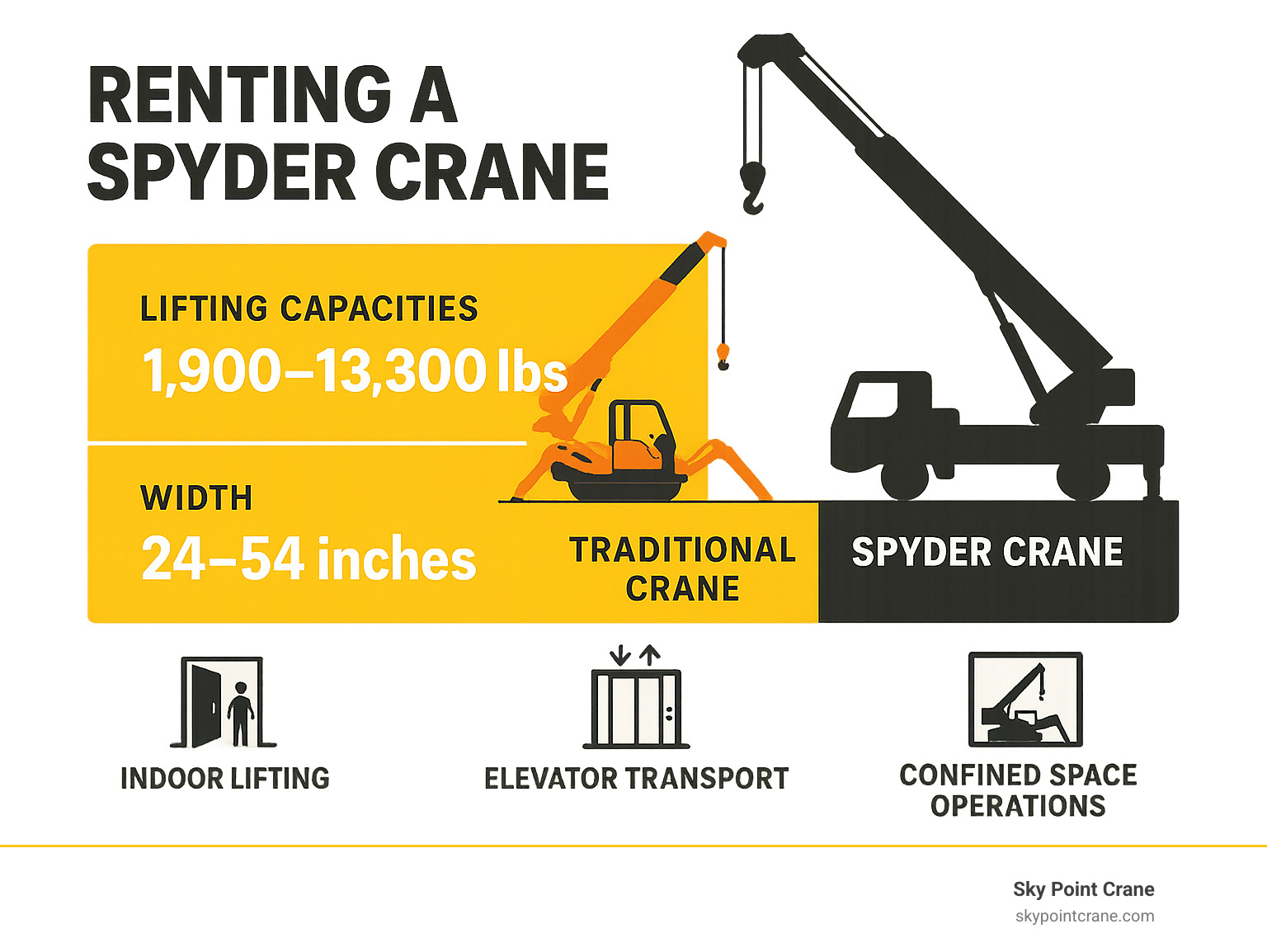
When you’re renting a mini crane, you’re getting something fundamentally different from traditional truck-mounted cranes. Conventional cranes are built for power and reach, while mini cranes are designed to solve problems in tight spaces where bigger equipment simply can’t go.
The compact footprint sets these machines apart. The smallest units are light enough to ride in standard elevators. When folded for travel, it measures only 23 inches wide by 51 inches long by 74 inches high. It rolls through doorways, down hallways, and into spaces where you’d never dream of bringing a traditional crane, going from travel mode to working position in about five minutes.
The mini crane-type outriggers offer up to 52 different configurations. Traditional cranes have fixed outrigger positions, but mini cranes adjust each leg independently. You can level the crane on uneven surfaces without cribbing, work around obstacles like walls or equipment, and set up in spaces where conventional cranes couldn’t fit through the door.
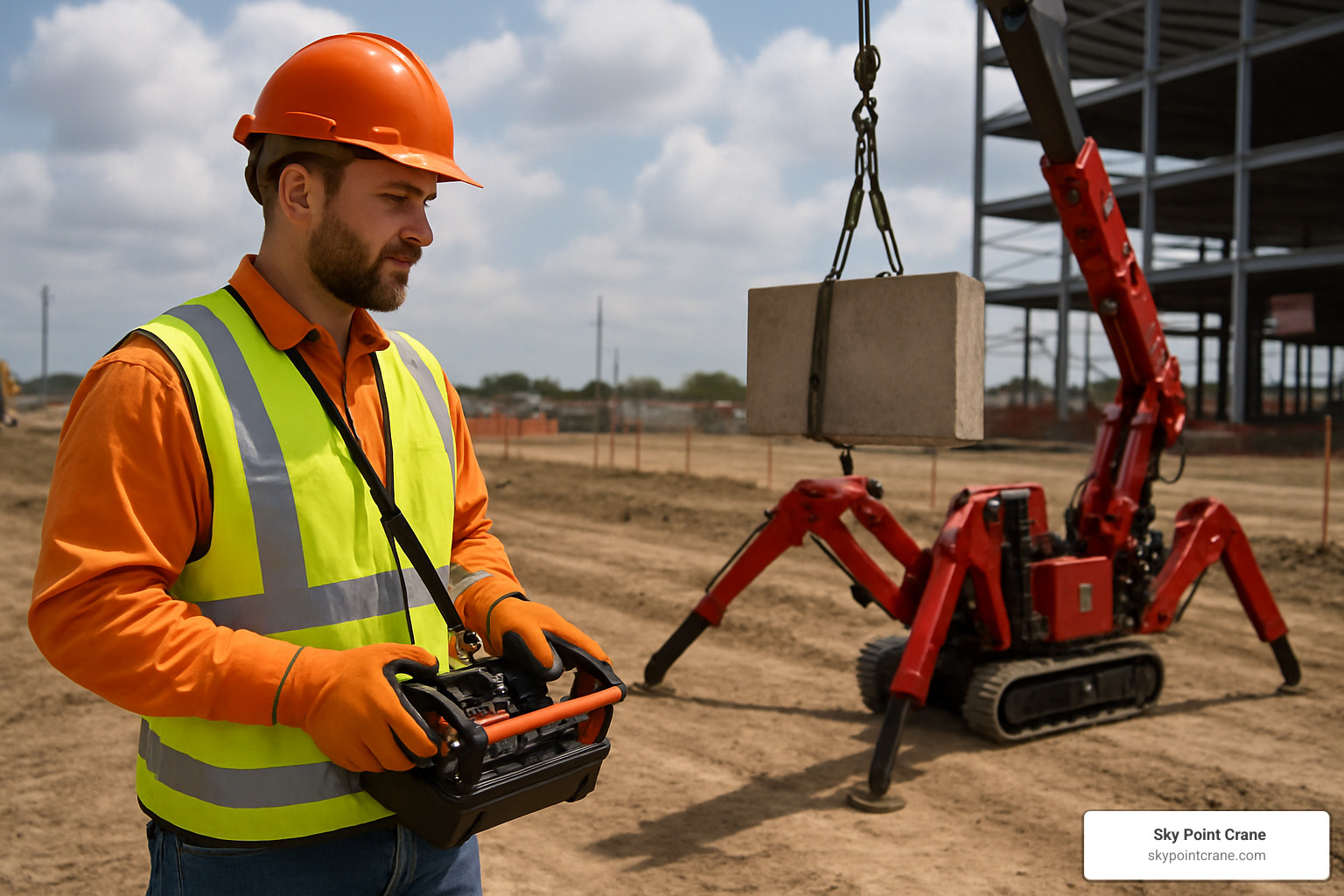
Every mini crane comes with radio remote control as standard equipment. The operator gets optimal visibility during lifts, can place loads precisely from safe distances, and often works alone without needing signal persons. It keeps everyone away from potential hazards while maintaining complete control.
Lifting capacities range from light interior picks on the most compact units up to substantially heavier work on larger models. Boom lengths extend up to 81 feet, and every model features 360-degree continuous rotation for full-direction lifting without repositioning the crane base.
These machines handle multi-fuel options, switching between diesel, propane, battery-electric, or 110V plug-in power depending on your jobsite needs. Whether you’re working outdoors with no emission restrictions or inside a hospital where quiet, clean operation is essential, there’s a power option that fits.
Key Components & Safety Systems
Safety is built into every component. The Turn-Over-Protection System (T.O.P.S.) continuously monitors ground-bearing pressure and crane stability, giving real-time readouts to prevent tip-over incidents.
The anti-two-block system prevents the hook block from being raised into the boom tip, preventing boom damage, load line failure, injuries, and expensive repairs.
Modern mini cranes include self-diagnostic computers that monitor engine performance, hydraulic pressure and temperature, load moment calculations, safety system status, and maintenance intervals. If something’s not right, you’ll know before it becomes a problem.
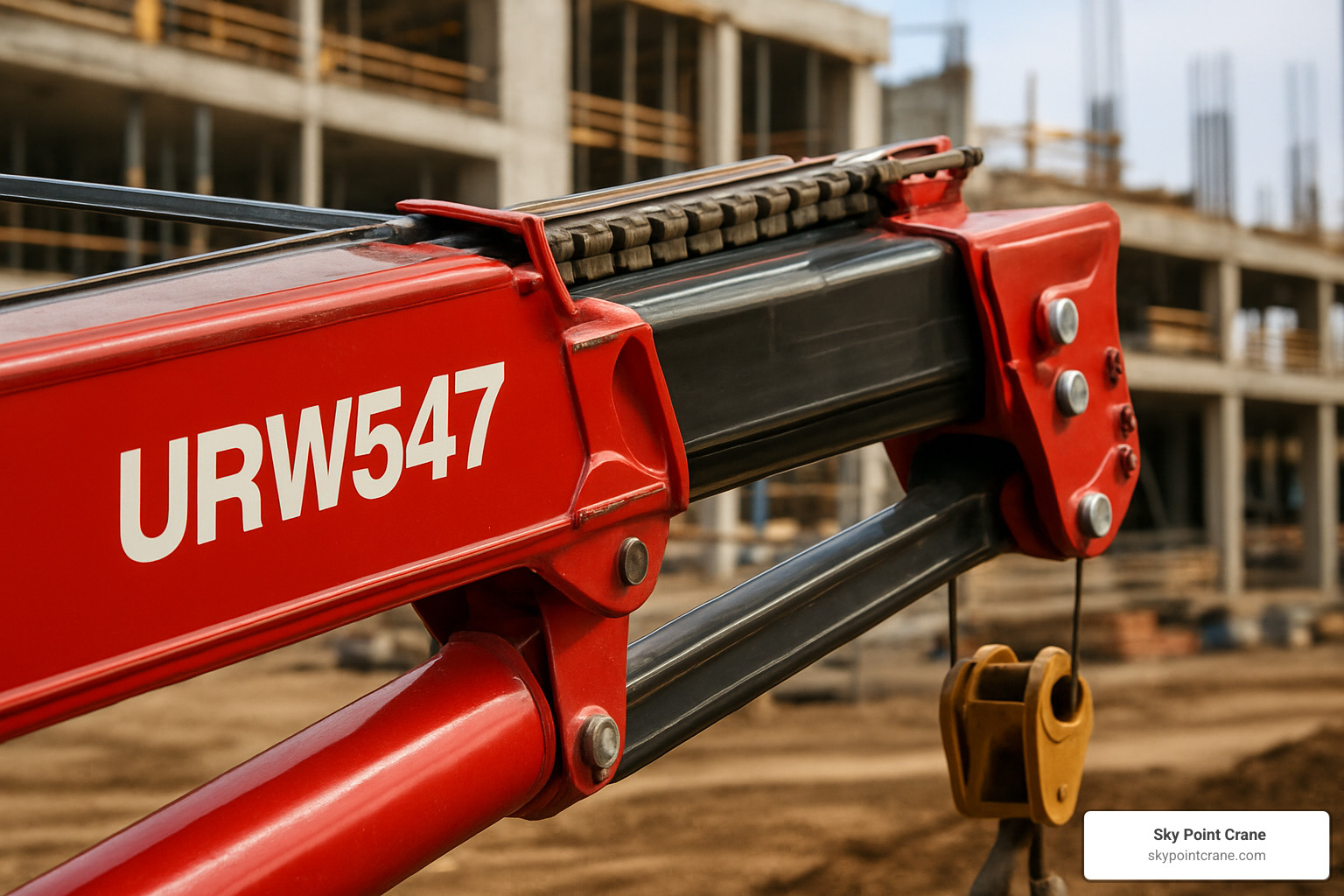
The boxed boom design provides increased rigidity and reduced sway during lifting compared to round boom construction. That translates to better load control, more accurate positioning, improved durability, and greater operator confidence during precision lifts.
Power Sources for Indoor/Outdoor Use
One of the biggest advantages of renting a mini crane is choosing the right power source for your specific work environment.
Diesel engines work best for outdoor applications with no emission restrictions. They offer the highest power-to-weight ratio, longest operating range between refueling, and most cost-effective operation for extended jobs.
Propane power burns cleaner than diesel, making it perfect for semi-enclosed spaces. The fuel is easy to handle and store, provides good power output with reduced emissions, and has become popular for warehouse and industrial applications.
Battery-electric systems produce zero emissions during operation – perfect for indoor work. They run quietly enough for occupied buildings and can travel on battery power, then plug into standard 110V outlets for lifting operations.
110V electric plug-in options give you unlimited operating time when connected to power. Zero emissions, minimal noise, and the most economical choice for long-duration lifts make these ideal for extended indoor projects.
When to Use a Mini Crane: Industries & Real-World Wins
Renting a mini crane becomes the smart choice when you’re facing a lifting challenge that makes traditional cranes impossible to use. These compact powerhouses turn “impossible” jobs into routine operations across dozens of industries.
Construction sites present some of the trickiest scenarios. Picture installing a massive HVAC unit on the third floor of an occupied office building – the only way in is through a standard doorway and up a freight elevator. We’ve done exactly this job with a compact unit that squeezed through that 24-inch opening. The alternative would have involved cranes, street closures, and removing exterior walls.
Urban construction sites love mini cranes because they can work in spaces as tight as 4.5 feet wide. While truck-mounted cranes need acres of space and perfect ground conditions, mini cranes slip between buildings, set up in basements, and handle structural steel placement where conventional equipment would never fit.
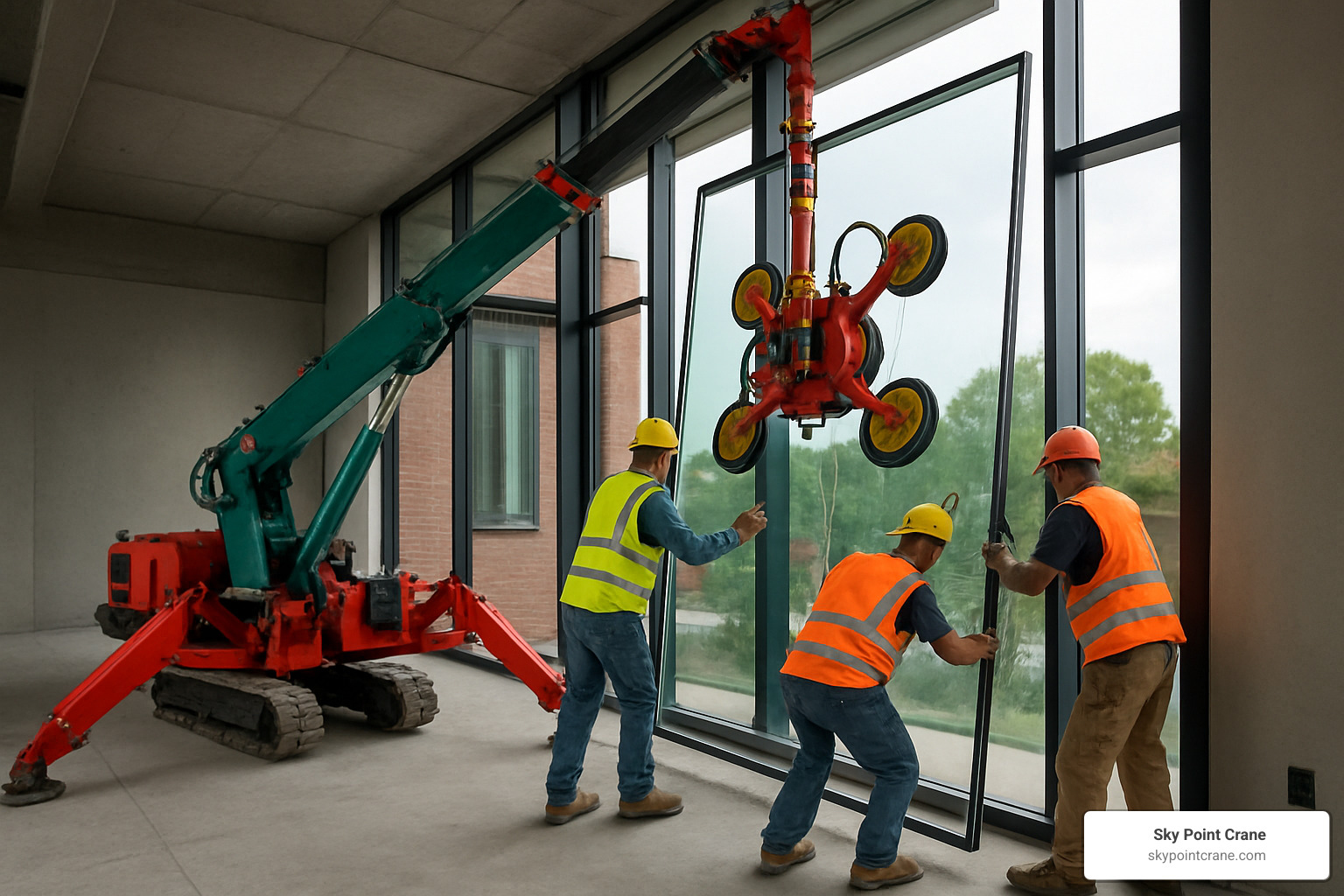
The glazing industry has practically adopted mini cranes as standard equipment. Glass installation demands surgical precision – you’re handling expensive, fragile panels that need perfect placement. Mini cranes excel here because they provide millimeter-accurate control while maneuvering in spaces that would make other cranes claustrophobic.
Steel erection projects in confined areas have found their perfect match. These cranes can work inside partially constructed buildings, steer around existing structural elements, and place heavy steel members with precision. One project manager told us: “This project would have been extremely costly if not for the MINI CRANE mini crane.”
Plant maintenance operations face unique challenges – they need lifting power in spaces designed for production, not crane access. Mini cranes solve this by fitting through standard industrial doorways, working around active production lines, and operating with zero emissions when using electric power.
Residential tree work has found these cranes can access backyards through garden gates, work in spaces where traditional tree removal equipment would destroy lawns, and operate quietly enough that neighbors don’t complain. The low ground pressure means minimal damage to landscaping.
Cost savings consistently surprise customers. When you factor in avoided street closures, reduced labor crews, faster setup times, and the ability to work in occupied buildings, the numbers add up quickly. Projects often save tens of thousands in alternative lifting costs.
Accessory Add-Ons That Expand Capability
The real magic happens when you match the right attachment to your specific challenge. Glass manipulators use vacuum technology to grip large glass panels safely, with built-in rotation capability for perfect positioning. The safety backup systems give glazing crews confidence when handling expensive curtain wall sections.
Searcher hooks might look simple, but they’re game-changers for precision work. These specialized hooks help guide structural members through tight openings and around obstacles.
Work baskets transform mini cranes into personnel lifts, providing OSHA-compliant access to liftd work areas. This eliminates the need for scaffolding in many situations and dramatically increases productivity for maintenance tasks.
The auxiliary winch kit adds dual-line lifting capability for those awkward, heavy loads that need extra control. Combined with the standard lifting capacity, it opens up possibilities for complex rigging scenarios.
Renting a Mini Crane: Model Selection, Rates & Process
Choosing the right mini crane for your project doesn’t have to be complicated. Think of it like picking the right tool for the job – you need enough lifting power, but you also need to fit through your access route.
Machine Selection Made Simple:
The most compact units are narrow enough to pass through a standard doorway. They ride elevators and squeeze into your tightest spaces. Perfect for those “how are we going to get equipment up there?” moments.
Mid-range machines step up the capacity while keeping that same narrow profile. The 28.4-foot boom gives you more reach, making it ideal when you need serious lifting power but still have to fit through standard doors.
For heavy-duty work, the larger machines bring more lifting muscle and considerably more boom reach, for when you need maximum reach and capacity.
Lift Planning That Actually Works:
Before we deliver any crane, we walk through your project step by step. We measure doorways, check elevator dimensions, and evaluate ground conditions. No surprises, no “oops, it doesn’t fit” moments on delivery day.
Our 3D lift planning service takes the guesswork out of complex projects. We create computer models showing exactly how your lift will work, where potential problems might pop up, and how to position everything for success. It’s like having a crystal ball for your project.
The Booking Process:
Getting started is straightforward. We talk through your project needs, assess your site, and recommend the right model. Once we prepare your quote with all costs included, you can execute the contract and schedule delivery. No hidden fees or last-minute surprises.
Delivery happens on our specialized trailers, and the crane drives itself off using its crawler tracks. We position it exactly where you need it and test everything before your crew starts work. When you’re done, we pick it up with minimal fuss.
For current fuel surcharge information, check the latest fuel surcharge details.
Steps for Renting a Mini Crane Online
Site Assessment First:
Every successful renting a mini crane project starts with understanding your space. We look at access routes, measure those tight doorways, and check ground conditions. If you’re working indoors, we evaluate power availability for electric models and consider how the crane might affect ongoing operations.
Sometimes the trickiest part isn’t the lift itself – it’s getting the crane to where it needs to be. We’ve squeezed cranes through spaces that seemed impossible and found creative solutions for challenging access routes.
3D Lift Planning Services:
For complex projects, our 3D lift planning takes your project from “we think this will work” to “we know exactly how this will work.” We create detailed computer models showing the entire lift sequence, identify potential conflicts before they happen, and optimize crane positioning.
This planning documentation also helps with permits and safety meetings. When inspectors see detailed 3D models showing clearances and load paths, approvals happen faster.
Getting Your Quote:
Our online quote system makes renting a mini crane simple. Submit your project details through our secure portal, and you’ll get preliminary pricing within 24 hours. For complex projects, we schedule site visits to ensure accuracy.
The detailed proposals include all costs and terms upfront. Electronic contract execution speeds up the process, so you can focus on your project instead of paperwork.
Cost Factors When Renting a Mini Crane
Understanding Rental Rates:
Our base rental starts with a minimum 1.75-hour period at $306.25. After that, overage charges run $43.75 per 15-minute increment. For longer projects, daily, weekly, and monthly rates offer better value.
Mobilization Made Clear:
The standard $175 mobilization fee covers getting the crane to your site, setting it up, and picking it up when you’re done. This fee might vary based on distance from our depot, but combining rentals with other equipment can create cost savings.
Rental Protection Plan:
For $500 maximum, our Rental Protection Plan limits your damage liability to just 10%. It covers theft protection, tire damage, and waives rental charges if repairs are needed. Given the value of these machines, it’s smart protection.
Fuel Payment Options:
We offer flexible fuel arrangements to match your preferences. The “No Worries” prepay option charges for a full tank upfront with refunds for unused fuel. Pay on return charges only for fuel consumed. Return full puts refueling responsibility on you.
Variable Surcharges Explained:
Our transportation surcharge ranges from 0.5-14.5% variable plus 9% fixed, based on current diesel prices. We also include an environmental fee supporting proper disposal and recycling. These aren’t government-mandated, but they help us maintain environmental responsibility while keeping our equipment in top condition.
Safe Operation & Training Essentials
When you’re renting a mini crane, safety isn’t just a priority – it’s the foundation of everything we do. Proper training and safety protocols don’t just prevent accidents; they make operations smoother and more efficient.
NCCCO certification is your starting point for legal crane operation. The National Commission for the Certification of Crane Operators requires both written exams covering safety regulations and hands-on practical testing with actual equipment. Mini cranes often require specialty endorsements beyond basic crane certification.
The certification process covers crane operations, load calculations, and safety protocols specific to confined spaces. Continuing education keeps operators current with evolving industry standards, and regular recertification ensures skills stay sharp. At Sky Point Crane, we only work with certified operators because proper training prevents costly mistakes and dangerous situations.
Personal protective equipment varies depending on your work environment. Hard hats and safety shoes are standard, but confined-space work often requires additional protection. High-visibility clothing becomes critical when working near traffic or active construction zones.
Pre-lift inspections save projects. Every mini crane operation starts with a thorough equipment check. We examine safety decals, test all controls and safety systems, and verify fluid levels and tire condition. The radio remote control gets range-tested before any lifting begins. Any defects or maintenance needs get documented immediately.
Outrigger setup separates the professionals from the amateurs. These articulating outrigger legs can be configured dozens of ways, but each setup must follow manufacturer specifications. Bubble levels ensure the crane stays properly positioned, while ground bearing capacity determines whether your lift succeeds or fails. The boom and outrigger interlock systems provide continuous monitoring, and individual leg adjustments handle uneven terrain safely.
Confined-space protocols require extra attention when working indoors or in tight areas. Diesel and propane units need adequate ventilation, while electric models eliminate emission concerns entirely. Clear egress routes keep personnel safe, and non-marking tracks protect expensive flooring.
On-Rental Support & Service
Our support doesn’t end when the crane arrives at your jobsite. We’ve built our reputation on being there when you need us most. Whether it’s a quick operational question at 2 AM or a complex technical issue during peak construction hours, our 24/7 technical support hotline connects you with certified technicians who know these machines inside and out.
Remote diagnostic capabilities let us troubleshoot electronic systems without sending a technician to your site. This saves time and keeps your project moving. When parts are needed, our rapid deployment system gets them to you fast.
Sometimes you need more than just equipment – you need expertise. Our onsite operator services provide NCCCO-certified professionals who understand the unique challenges of confined-space lifting. These operators integrate seamlessly with your project team and bring years of specialized experience to complex lifts.
Equipment reliability matters for project schedules, which is why we guarantee immediate replacement for mechanical failures. Our diverse fleet ensures we can match your original specifications, and backup units are available for critical project phases.
Frequently Asked Questions about Mini Crane Rentals
When you’re considering renting a mini crane, you probably have questions about capacity, certification, and costs. These are the most common concerns we hear from contractors and project managers, and honestly, they’re all great questions that deserve detailed answers.
What lifting capacity and reach do I need?
This is probably the most important question you’ll ask, and getting it wrong can either leave you with equipment that can’t handle your job or cost you money on a crane that’s bigger than necessary.
Start with your actual load weight – not just the material itself, but everything that goes up with it. That includes rigging hardware, lifting beams, and any attachments. We always recommend adding a 25% safety margin on top of your calculated weight. So if you’re lifting a 3,000-pound HVAC unit with 200 pounds of rigging, plan for at least 4,000 pounds of capacity.
Working radius is where things get tricky. A larger machine might lift several tons, but only at a short radius from the crane’s center. Push that same crane out to its maximum 50.9-foot reach, and you’re down to just 2,200 pounds of capacity.
Here’s a real example: We had a contractor who needed to place a 2,500-pound generator on a rooftop. He figured the most compact machine wouldn’t work, but when we calculated the actual working radius at only 12 feet, the smaller crane handled it perfectly – and saved him $200 per day in rental costs.
Always check the load charts before making your final decision. If you’re not comfortable with these calculations, our team provides free lift planning consultation with every rental quote. We’d rather spend 20 minutes on the phone helping you pick the right crane than deal with problems on the jobsite.
Do I need special certification to operate?
Yes, you absolutely need proper certification, and this isn’t something to take lightly. The good news is that if you’re already running other mobile cranes, you probably have most of what you need.
NCCCO certification is the gold standard for crane operators nationwide. Your mobile crane certification typically covers mini cranes, but you’ll want to verify this with your certifying body. Some local jurisdictions have additional requirements, particularly in major metropolitan areas.
Even with proper certification, every mini crane model has its quirks. The radio remote control takes some getting used to, and the outrigger configurations are completely different from truck cranes. We’ve seen experienced operators struggle with their first mini crane job simply because they didn’t take time to familiarize themselves with the controls.
That’s why we offer certified operator services with every rental. Our operators know these machines inside and out, understand confined-space safety protocols, and can coordinate seamlessly with your crew. For complex lifts or high-value loads, having our operator on site often pays for itself through increased efficiency and reduced risk.
If you’re planning to operate the crane yourself, we provide comprehensive orientation on every delivery. This covers safety systems, load charts, and operational best practices specific to your chosen model.
How are delivery and fuel charges calculated?
Nobody likes surprise charges, so we break down every cost component upfront. Our pricing structure is designed to be transparent and competitive.
Delivery charges start with a base mobilization fee of $175 for most locations within our service area. This covers transport to your site, unloading, basic setup guidance, and pickup when you’re finished. For remote locations or challenging access situations, we may adjust this fee, but we’ll always discuss it before confirming your reservation.
Fuel surcharges are tied to national diesel prices and updated monthly based on Energy Information Administration data. The variable component ranges from 0.5% to 14.5% depending on current fuel costs, plus a fixed 9% component. We know this sounds complicated, but it keeps our base rates stable while fairly distributing fuel cost fluctuations.
We offer flexible fuel payment options to match your preferences. The “No Worries” prepay option charges you for a full tank upfront, then refunds unused fuel when you return the crane. Alternatively, you can pay only for fuel consumed or return the crane with a full tank.
Optional Rental Protection Plan costs 15% of your gross rental charges but limits your damage liability to just 10% (maximum $500) and provides theft protection. For the larger machines, this coverage often makes financial sense.
We provide detailed cost breakdowns with every quote, including all fees and surcharges. No hidden charges, no surprises – just straightforward pricing that helps you budget accurately for your project.
Conclusion & Next Steps
After three decades in the crane industry, I’ve watched renting a mini crane transform from a specialized solution to an essential tool for modern construction challenges. These compact powerhouses have opened doors – quite literally – to lifting possibilities that traditional cranes simply can’t match.
What started as a niche solution for glass installation has evolved into the go-to choice for countless projects across our region. From threading HVAC units through tight building openings to precision steel placement in active industrial facilities, mini cranes have proven their worth time and again.
At Sky Point Crane, we’ve made mini crane rentals our specialty because we understand the unique challenges you face. Our coverage across Western and Central Pennsylvania, Ohio, West Virginia, and Maryland means we know your local job sites, regulations, and the specific problems that come with working in established urban areas and active industrial facilities.
What sets us apart isn’t just our equipment – it’s our safety-first approach combined with genuine expertise. Our NCCCO-certified operators don’t just run the crane; they become part of your project team. They understand confined-space protocols, they know how to work around ongoing operations, and they bring the problem-solving skills that come from years of experience.
Our commitment to your success goes beyond equipment delivery. We provide 24/7 emergency support because we know projects don’t always stick to business hours. Our 3D lift planning services help you visualize complex lifts before you commit resources. And our transparent pricing means no surprise charges when the job is done.
The beauty of modern mini crane technology is how it makes the impossible routine. That “no way” moment when you first see a tight space transforms into “no problem” once you understand what these machines can do. Whether it’s a compact unit squeezing through a standard doorway or a larger machine delivering serious lifting power in spaces where truck cranes can’t even access, there’s likely a solution that fits your specific challenge.
Ready to find what mini crane rental can do for your next project? Our team is standing by to walk you through your options. We’ll help you evaluate your lifting requirements, recommend the right model, and handle all the logistics from delivery to pickup. Most quotes are ready within 24 hours, and we often arrange same-day delivery when time is critical.
Don’t let tight spaces derail your project timeline or budget. Contact Sky Point Crane today and let’s turn your lifting challenge into a success story.