
Lifting Your Income: A Guide to Crane Operator Wages
What Is the Average Salary for a Crane Operator in 2026?
The average salary for a crane operator in the United States lands between $60,000 and $80,000 per year — but that range tells only part of the story. Where you work, what type of crane you operate, and whether you hold an NCCCO certification can push that number dramatically higher.
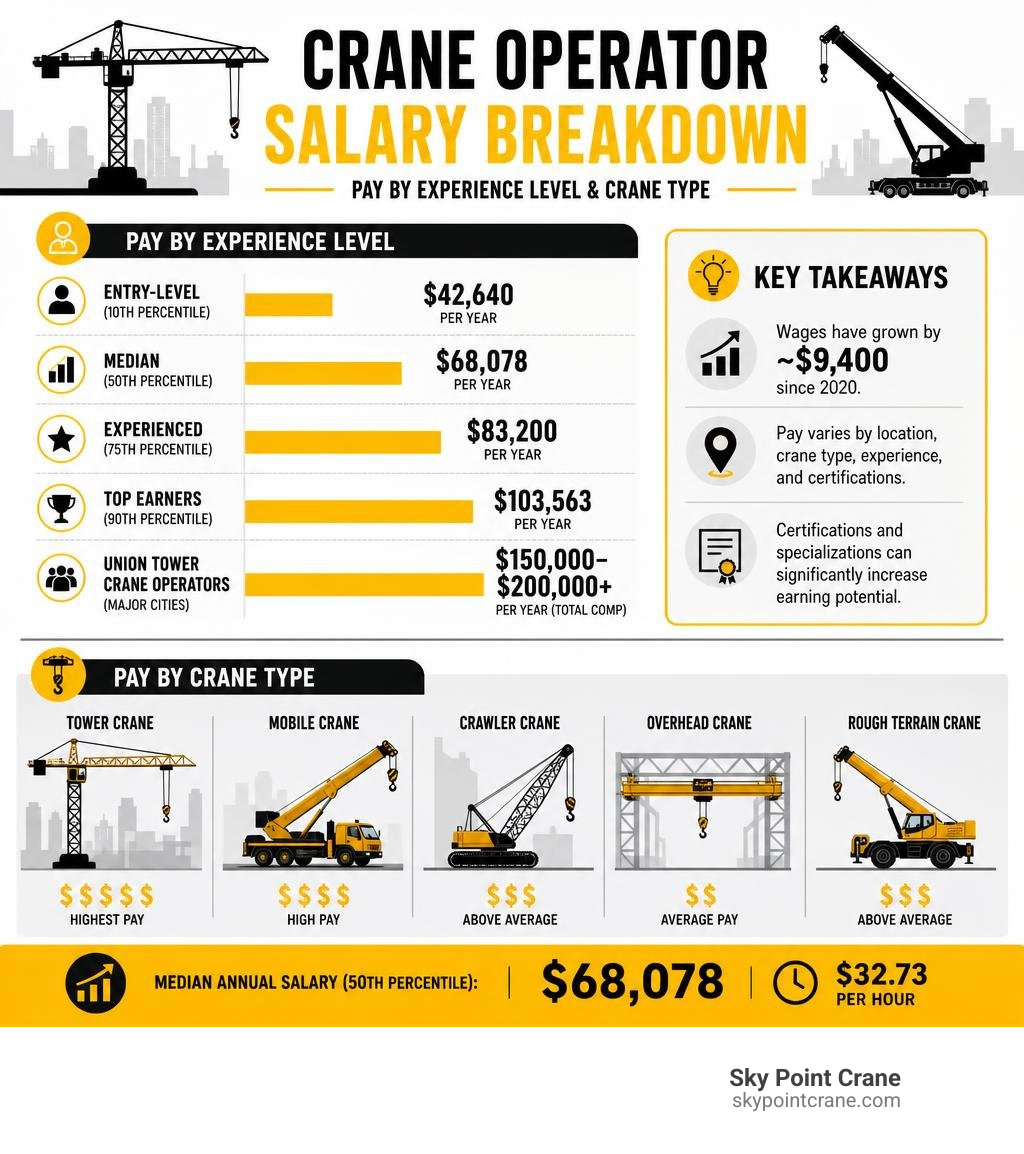
Here’s a quick snapshot of what crane operators earn nationally:
| Earning Level | Annual Salary | Hourly Rate |
|---|---|---|
| Entry-level (10th percentile) | ~$42,640 | ~$20.50/hr |
| Median (50th percentile) | ~$68,078 | ~$32.73/hr |
| Experienced (75th percentile) | ~$83,200 | ~$40.00/hr |
| Top earners (90th percentile) | ~$103,563 | ~$49.79/hr |
| Union tower crane operators (major cities) | $150,000–$200,000+ (total comp) | $75.00+/hr |
Sources: BLS OEWS May 2025 data via CompSignal; 2024 Construction Craft Salary Survey
These numbers shift significantly based on your state, your crane type, and your experience level. A tower crane operator in New York City earns a fundamentally different paycheck than an overhead crane operator in rural Ohio — and understanding why can help you plan your career accordingly.
Wages have also been climbing. Since 2020, the average crane operator salary has grown by roughly $9,400, driven by a construction labor shortage and a wave of retiring operators. That trend shows no sign of slowing.
I’m Dave Brocious, Executive Leader at Sky Point Crane, with over 30 years of experience in strategy, operations, and business development — including deep exposure to what certified crane professionals earn and why the average salary for a crane operator varies so widely across markets. In that time, I’ve seen how the right certifications and specializations can transform a solid trade career into a genuinely high-earning one.
The National Average Salary for Crane Operator Professionals in 2026
When we look at the big picture, operating a crane is one of the most financially rewarding careers in the skilled trades that doesn’t require a four-year college degree. According to the BLS Crane and Tower Operators Salary – $68,078 Median May 2025 | CompSignal data, the national median salary sits comfortably at $68,078 per year, which translates to roughly $32.73 per hour.
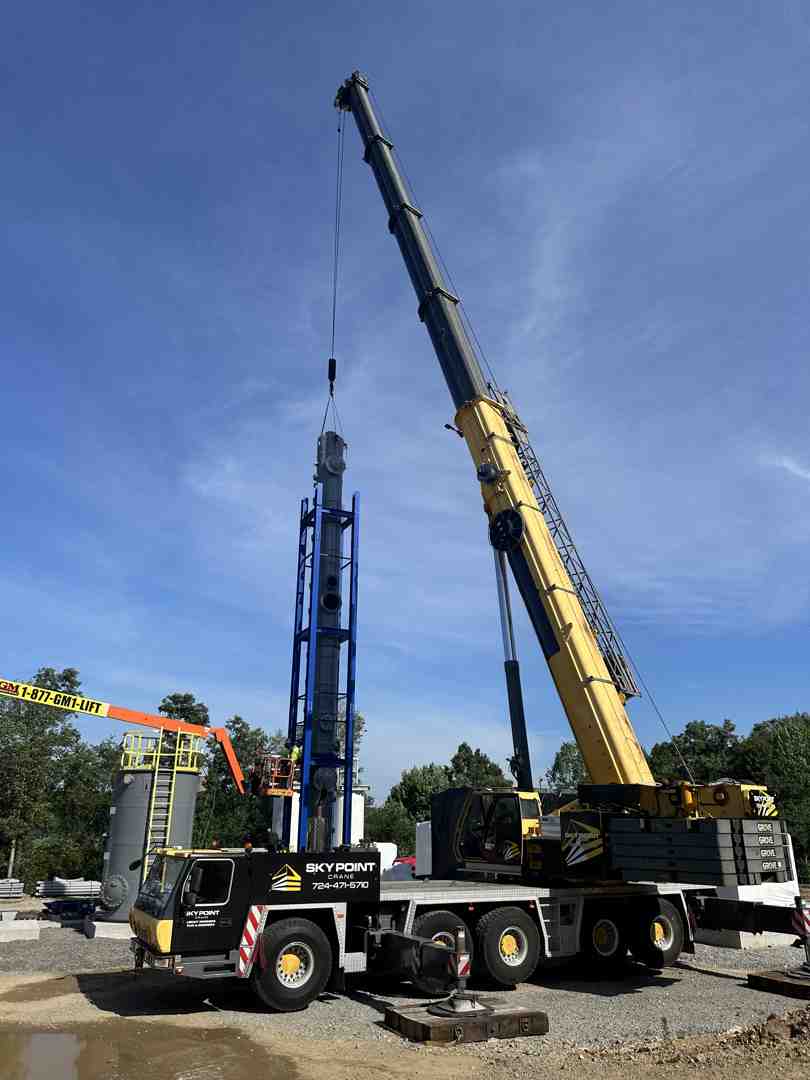
However, we must distinguish between the overall Bureau of Labor Statistics (BLS) average and the real-world earnings of specialized construction field operators. The BLS data groups high-paying construction roles together with lower-paying indoor industrial or overhead crane positions. In the field, particularly for mobile and tower crane operators, the numbers are much higher. For instance, the Construction Craft Salary Survey reports that mobile crane operators take home an average base salary of $80,674 ($38.79 per hour).
How does this stack up against other skilled trades? Let’s look at how crane operators compare to other essential construction professionals:
| Trade Profession | Median Annual Salary |
|---|---|
| Boilermaker | ~$109,000 |
| Land Surveyor | ~$98,000 |
| Pile Driver Operator | ~$87,644 |
| Building Inspector | ~$81,000 |
| Crane Operator (All Types Median) | $68,078 to $75,123 |
| Electrician | ~$71,000 |
| Ironworker | ~$61,000 |
| Brickmason | ~$61,000 |
The demand for these roles is incredibly strong. The construction industry continues to face a serious labor shortage, meaning skilled operators are highly sought after. With major infrastructure investments rolling out nationwide, the job outlook remains excellent, with thousands of annual openings expected through the next decade.
Entry-Level vs. Top Earners
No one steps into the cab of a 500-ton all-terrain crane on day one. Like any skilled trade, crane operation rewards patience, safety, and hands-on experience.
According to Crane Operator Salary 2026 | USA Salaries , entry-level professionals (typically the bottom 10th percentile) start around $43,590 per year. These are often operators who have just completed their basic training, obtained their initial certifications, and are working under close supervision or operating smaller, less complex equipment.
As you gain experience, your earning potential rises quickly:
- Entry-Level (10th Percentile): $43,590 – $56,160/year
- Mid-Career (50th Percentile): $64,280 – $75,123/year
- Top Earners (90th Percentile): $97,962 – $132,580+/year
For those focused on long-term wealth building, crane operation offers a rare, debt-free pathway to a six-figure income. By avoiding student loans and earning while you learn through apprenticeships, you can build a substantial net worth early in your career.
Salary Differences by Crane Type and Specialization
Not all cranes are created equal, and neither are their paychecks. The complexity, risk, and physical demands of the equipment directly dictate what an employer is willing to pay.
According to Crane Operator Salary 2024: $75,123 Median, Top 10% $112,685 (BLS OEWS), TradeWages , specialization is the fastest way to maximize your earnings. High-paying sectors like specialized machinery rental services, heavy civil construction, and aerospace product manufacturing pay significantly higher wages than general warehousing or manufacturing plants. Let’s break down the two primary career paths.
Mobile Crane Operator Earnings
Mobile crane operators drive and control cranes that move around the job site, utilizing telescoping booms or lattice booms to raise and lower heavy equipment. Because mobile cranes must be driven on public roads and set up safely on varying terrain, this role requires a deep understanding of load charts, rigging, and ground conditions.
The average base salary for a mobile crane operator is $80,674 per year ($38.79/hour). To reach these numbers, operators must invest in comprehensive Crane Operator Training to master different setups, from rough-terrain and crawler cranes to massive all-terrain units.
Tower Crane Operator Earnings
If you aren’t afraid of heights, tower crane operation is the pinnacle of construction careers. Tower crane operators sit hundreds of feet in the air, controlling the massive structures used to build skyscrapers and high-rise commercial buildings.
Because of the extreme heights and the high-stakes environment of urban construction, tower crane operators command premium rates. While general averages show tower crane base salaries between $68,040 and $77,792, top-tier operators routinely earn six figures. In major union markets, experienced tower crane operators can clear $150,000 to $200,000+ in total compensation. Securing these high-paying roles requires keeping an eye on NCCCO Certified Crane Operator Jobs and proving your safety record in dense metropolitan areas.
Geographic Breakdown: Highest-Paying States and Metros
Where you park your lunchbox matters just as much as what crane you run. Geographic location, local cost of living, and regional construction demand heavily influence the average salary for a crane operator.

According to How Much Do Crane Operators Make in 2026? (Salary by State) | Wealthvieu , metropolitan areas with massive infrastructure projects and strong union presence offer the highest nominal pay. For example, Las Vegas, NV boasts a median crane operator salary of $132,560, while New York City averages over $115,000. However, you must always weigh these high salaries against the local cost of living to understand your real purchasing power.
Top-Paying States Nationally
According to the Crane and Tower Operators – Bureau of Labor Statistics data, the highest-paying states for crane and tower operators include:
- New York: $118,190 (Mean Annual Wage)
- Hawaii: $110,940 (Mean Annual Wage)
- Nevada: $108,890 (Mean Annual Wage)
- California: $100,000+ (Top-end earners)
While these coastal states offer eye-popping numbers, the high cost of housing and state taxes can eat into your take-home pay. This is why many operators look to the industrial heartland, where wages remain strong but the cost of living is far more manageable.
Regional Focus: PA, OH, WV, and MD
For those of us working and living in the Mid-Atlantic and Tri-State regions, the compensation landscape is highly competitive. Let’s look at how our home territories compare:
- Maryland: According to Crane operator salary in Maryland ‐ CareerExplorer , operators in Maryland earn an average of $78,752 per year, which is 15% above the national average. The proximity to major Baltimore infrastructure projects and federal construction drives this demand.
- Pennsylvania: The average crane operator salary in PA sits at $67,795, hovering right around the national average. However, in major hubs like Pittsburgh and Central PA, heavy industrial projects and commercial developments often push wages higher. For operators in this state, obtaining On Site Mobile Crane Operator Training in Pennsylvania is a key step to unlocking top-tier rates.
- Ohio: Data from Crane operator salary in Ohio, 2026 – Indeed indicates a statewide average of $60,262 per year. While this is slightly below the national average, Ohio’s exceptionally low cost of living means your real-world purchasing power is fantastic.
- West Virginia: According to Crane operator salary in West Virginia ‐ CareerExplorer , the average salary is $53,414 (with some BLS estimates showing mean wages up to $59,210). The energy sector, highway construction, and industrial manufacturing are the primary drivers of these stable, long-term jobs.
Key Factors Influencing Crane Operator Earnings
If you want to maximize your paycheck, you need to understand the levers that drive your earnings. Your base hourly rate is only the foundation.
According to How Much Does a Crane Operator Make in 2026? , total compensation packages are heavily boosted by:
- Overtime Pay: Crane work is rarely a strict 9-to-5. When concrete is pouring or critical steel is being hung, operators work until the job is done. Overtime (time-and-a-half or double-time) can easily add $7,500 to $15,000+ to your annual earnings.
- Per Diem: On travel jobs, per diems covering food and lodging (typically $75 to $150+ per day) keep your personal expenses near zero while on the road.
- Project Bonuses: High-stakes projects often feature safety or completion bonuses for operators who finish the job ahead of schedule without incident.
How Experience Affects the Average Salary for Crane Operator Roles
In crane operation, gray hair (or a well-worn hard hat) is a badge of honor. Experience directly equates to safety and efficiency. As you progress from an apprentice to a journeyman, your value to an employer skyrockets.
Mastering advanced skills, such as coordinating complex dual-crane lifts or understanding engineered rigging plans, allows you to transition from general labor rates to premium specialist wages. To make this leap, keeping your Crane Operator Certification current and expanding your endorsements is non-negotiable.
How NCCCO Certification Impacts the Average Salary for Crane Operator Positions
In the modern construction world, safety is everything. Holding an NCCCO (National Commission for the Certification of Crane Operators) certification is the gold standard that separates general equipment operators from high-earning professionals.
Industry data shows that holding an NCCCO certification can increase an operator’s earnings by over 36% compared to non-certified peers. Employers and project owners want the peace of mind that comes with certified professionals who know how to mitigate risk on-site.
To learn more about what this means for your career, check out our guide on Understanding NCCCO Certification What It Means for the Construction Industry. When you are ready to stand out on the job site, working with NCCCO Certified Crane Operators ensures you are aligned with the highest safety standards in the business.
Union vs. Non-Union Positions
The division between union and non-union roles is one of the biggest factors in a crane operator’s pay structure.
Union operators, typically represented by the International Union of Operating Engineers (IUOE), benefit from collective bargaining agreements that guarantee high hourly wages and robust benefits. For example, a union tower crane operator in a major metropolitan market might have a base wage of $75/hour, but their total compensation package can reach $110+/hour once health insurance, welfare funds, and pension credits (valued at $25 to $50/hour) are factored in.
Non-union operators often have more flexibility in terms of direct negotiation, overtime availability, and year-round steady employment with a single contractor, but they must carefully evaluate their health insurance and retirement savings plans, as these are rarely as comprehensive as union-backed pensions.
Frequently Asked Questions About Crane Operator Salaries
Can a crane operator make over $100,000 a year?
Absolutely. While the national median sits around $68,000 to $75,000, experienced operators routinely cross the six-figure mark. To achieve this, you should specialize in high-demand equipment (like tower cranes or large all-terrain mobile cranes), work in high-paying regions, and take advantage of overtime opportunities on major industrial or infrastructure projects.
Do you need a CDL to operate a crane?
Yes, for most mobile crane operators. Because mobile cranes are driven on public roads, you will generally need a Class A or Class B Commercial Driver’s License (CDL) to legally transport the equipment from our yard to the job site. Tower crane operators do not typically require a CDL to operate, though having one makes you a far more versatile and valuable asset to any crane rental fleet.
How long does it take to become a certified crane operator?
It typically takes between 2 to 5 years to become a fully qualified, high-earning journeyman crane operator. While you can pass your initial NCCCO written and practical exams after a few months of dedicated technical training, true mastery of the trade is built through a structured apprenticeship program combining classroom instruction with thousands of hours of supervised on-the-job seat time.
Conclusion
Operating a crane is far more than a job—it is a highly skilled, respected, and lucrative career. Whether you are maneuvering a telescoping mobile crane through a tight industrial site in Pittsburgh or lifting steel high above a job site in Maryland, your expertise is the linchpin of modern construction.
At Sky Point Crane, we know that our strength lies in our people. That is why we are proud to provide safe, reliable, and efficient lifting solutions across Western and Central Pennsylvania, Ohio, West Virginia, and Maryland using only top-tier, certified professionals. If you are ready to explore what your skills are truly worth in today’s market, take a look at our detailed breakdown of the NCCCO Certified Crane Operator Salary and take the next step toward lifting your income to new heights.