
Why Knuckle Boom Truck Cranes Are the Smart Choice for Complex Lifts
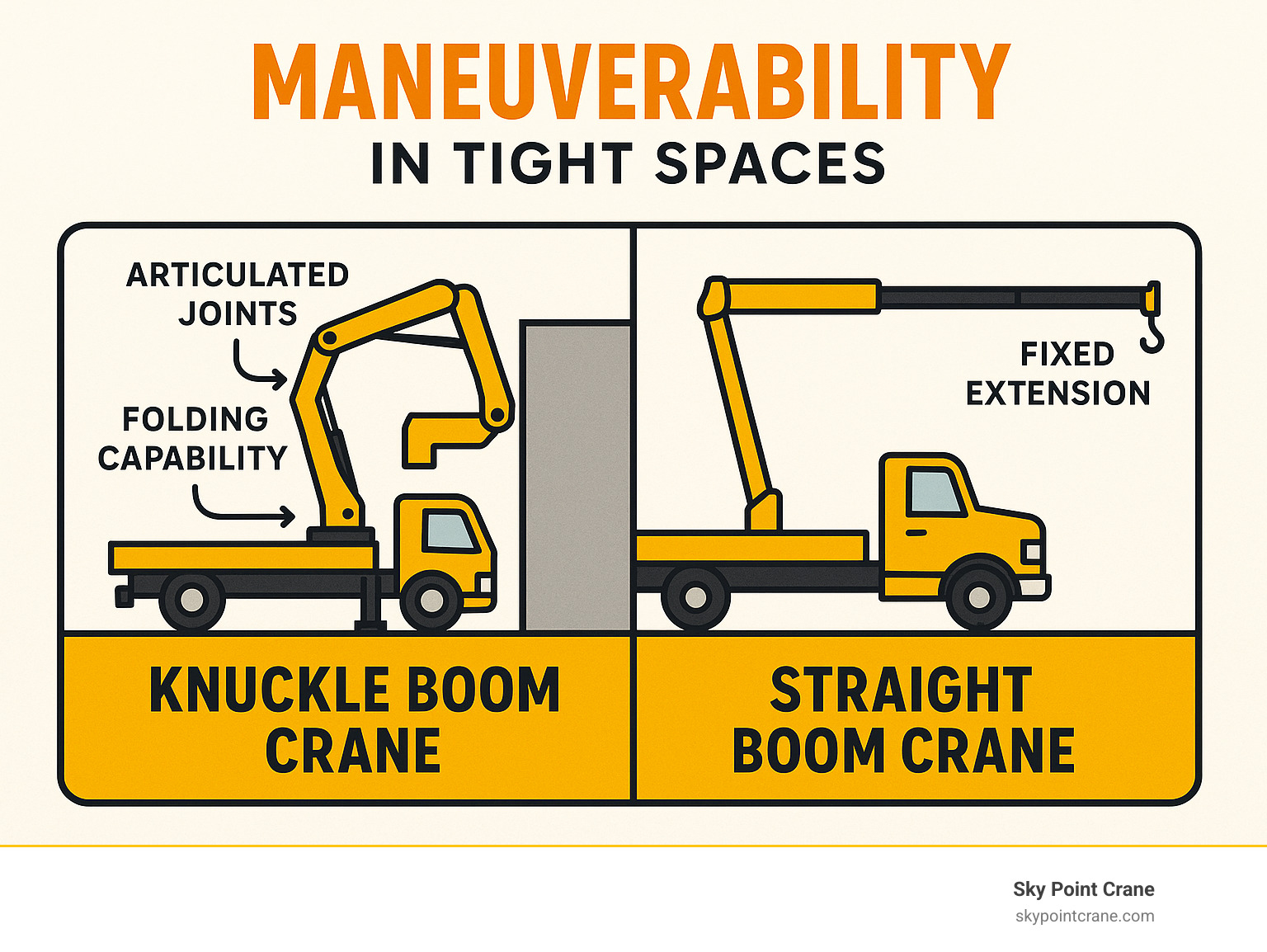
A knuckle boom truck crane, also known as an articulating or loader crane, is a truck-mounted lifting device with a multi-jointed arm that mimics a human finger. This design provides exceptional maneuverability for precise lifting while allowing the crane to fold compactly for transport. When stowed, it frees up valuable payload space on the truck bed, enabling more efficient transport of materials and equipment in a single vehicle.
Key Features:
- Articulated Design: Bends at multiple joints to reach around obstacles.
- Compact Storage: Folds into a small footprint, preserving truck bed space.
- 360° Rotation: Rotates fully for maximum positioning flexibility.
- Hydraulic Power: Ensures fast, smooth operation with precise load control.
- Versatile Mounting: Typically mounted behind the cab, leaving the truck bed available.
With over 30 years of experience solving complex lifting challenges, I’ve seen how the right knuckle boom truck crane can transform project efficiency. At Sky Point Crane, we match the perfect equipment to each unique lifting situation.
Knuckle boom truck crane word list:
How It Differs from a Straight Boom Crane
The differences between a knuckle boom truck crane and a straight boom (telescopic) crane significantly impact their applications:
- Maneuverability: Unlike a straight boom that extends linearly, a knuckle boom’s multiple joints allow it to bend and fold, reaching over, under, and around obstacles with ease.
- Horizontal Lifting: Knuckle booms excel at horizontal lifting, making them ideal for placing items through windows or into excavations, whereas straight booms are primarily for vertical lifts.
- Low Clearance Operation: Their articulating design requires less vertical clearance, making them perfect for indoor work, under bridges, or in cities with height restrictions.
- Compactness and Transport: A stowed knuckle boom has a small footprint, leaving more truck bed space for cargo. This improves transport efficiency, often allowing materials and the crane to be delivered in one trip.
- Versatility with Attachments: The articulated boom allows for more effective use of a wider range of specialized attachments for tasks like handling logs, recycling, or placing drywall.
At Sky Point Crane, we understand these distinctions and can help you determine if a knuckle boom truck crane is the right solution for your project. For more information, explore More info about our Boom Truck Crane services.
Versatility in Action: Key Applications and Industries
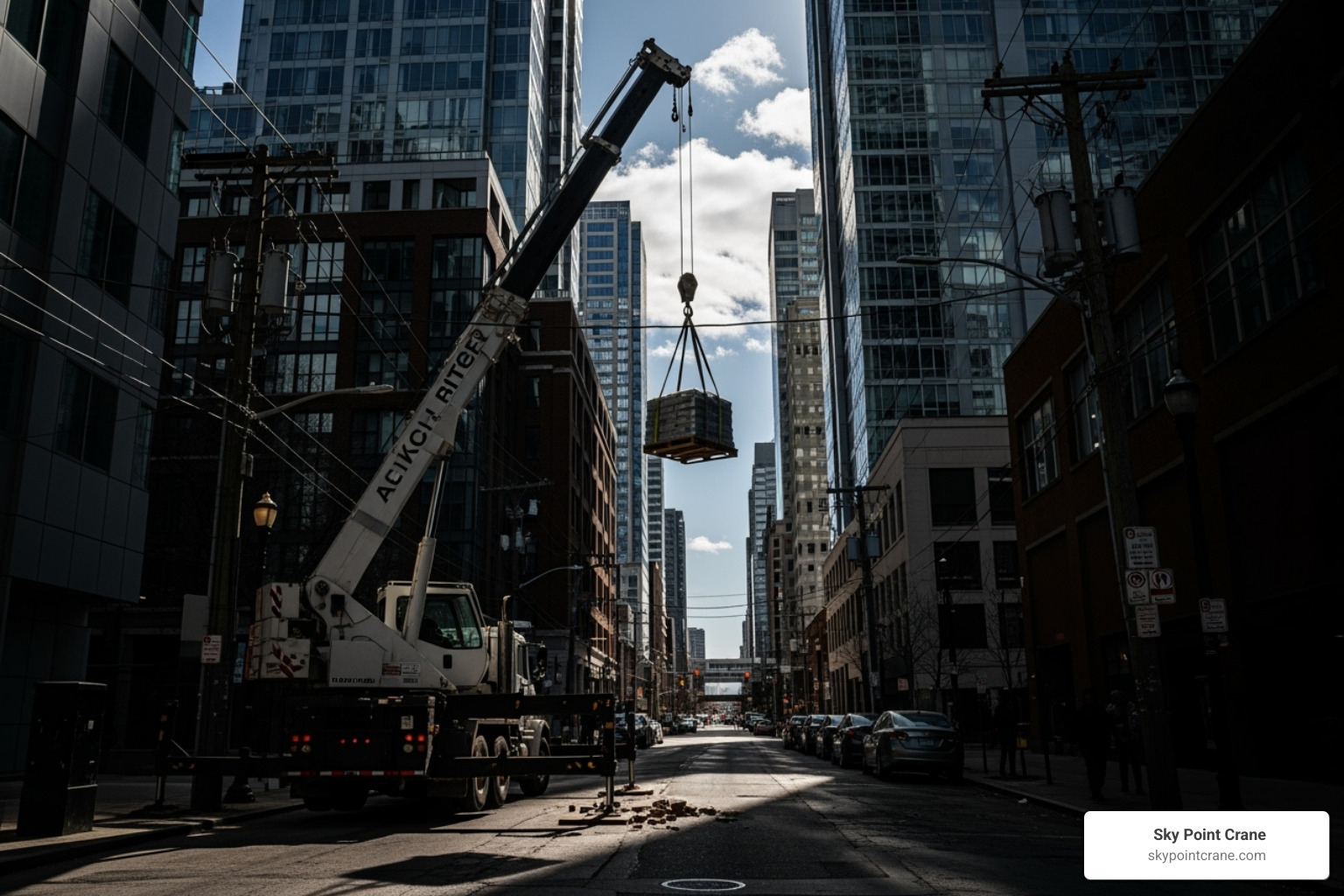
The knuckle boom truck crane is like a Swiss Army knife for lifting—a versatile problem-solver that adapts to challenges that would stump other equipment. Whether navigating narrow city streets or reaching over obstacles on a remote site, it consistently proves its value across countless trades.
Top Industries That Rely on Articulating Cranes
A knuckle boom truck crane is indispensable across many sectors:
- Construction: Excels at building material delivery, placing items like roof trusses and pallets of bricks with pinpoint accuracy.
- Roofing: Contractors value these cranes for reaching over existing structures to place materials directly onto rooftops, often cutting delivery time in half.
- Logistics and Debris Cleanup: They streamline freight handling and cleanup. The compact design allows trucks to carry a full payload alongside the crane.
- Utility Work: Ideal for installing street lights or maintaining power lines, offering precise control in confined urban spaces.
- Mining and Sign Installation: They support mining operations by transporting heavy equipment and are essential for placing large signs in tight urban areas.
- Emergency Services: Used for rescue operations and debris removal where maneuverability in difficult locations is critical.
- Forestry and Marine: Efficiently handle tasks from log loading to dock work.
For more insights, check out our guide on Maximizing Efficiency on Site: The Role of Truck Crane Rentals in Project Management.
The Core Advantages of Using a Knuckle Boom
- Precision Handling: The articulated design allows operators to guide loads with surgical accuracy, threading materials through tight spaces.
- Operation in Confined Spaces: They can work in narrow alleys, indoor facilities, and other tight job sites where traditional cranes cannot.
- Reduced Setup Time: These cranes are often operational within minutes of arrival, saving time and money compared to larger cranes.
- Increased Payload Space: The boom folds compactly, freeing the truck bed to transport materials and the crane in a single trip, boosting efficiency.
- Adaptability with Attachments: A wide range of attachments like grapples, forks, winches, and man baskets allows one crane to perform multiple tasks.
- Fuel Savings: Combining transport and lifting in one vehicle reduces trips and improves overall operational efficiency, benefiting both your budget and the environment.
How to Choose and Operate a Knuckle Boom Truck Crane
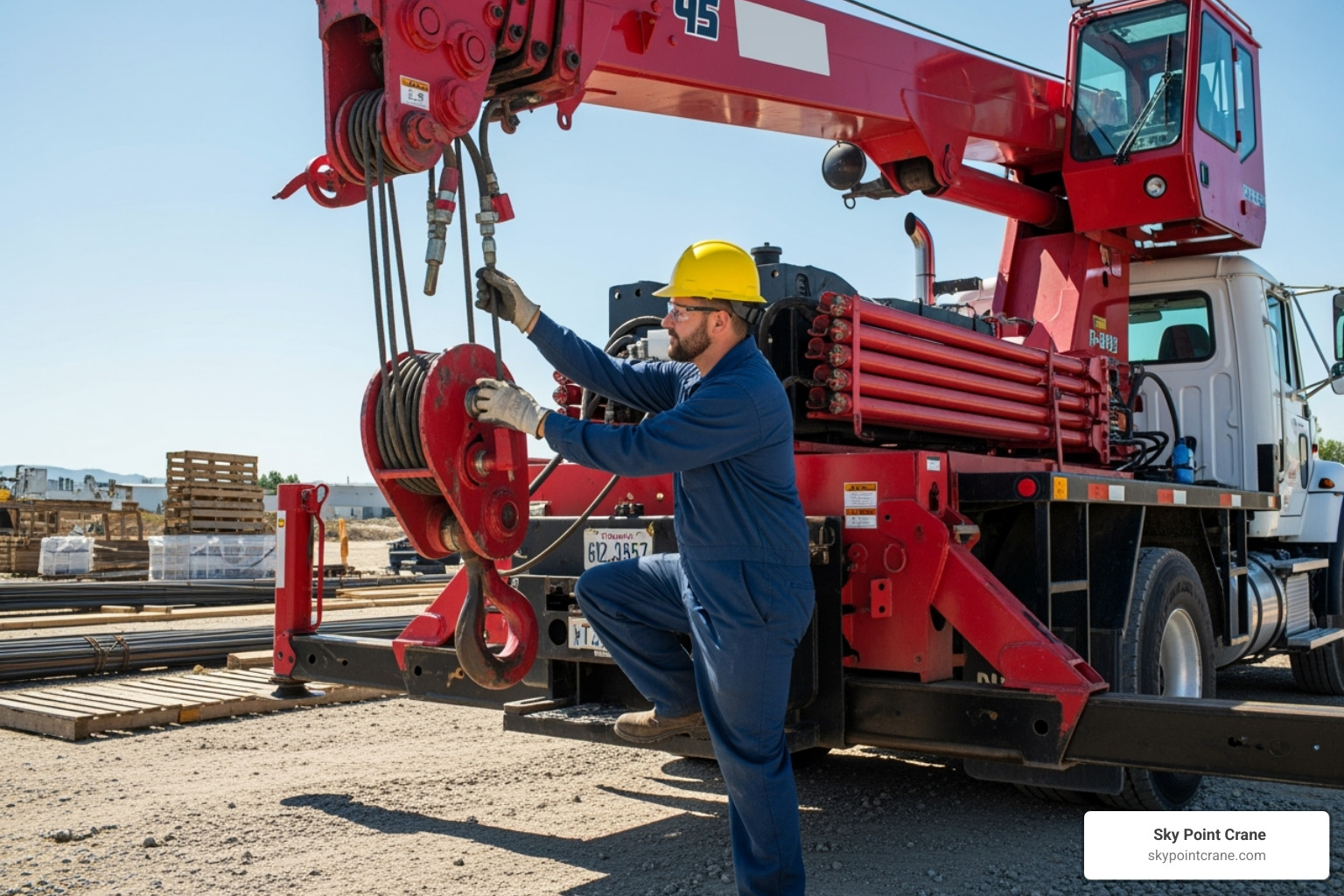
Choosing and safely operating the right knuckle boom truck crane is critical. Making informed decisions beforehand prevents costly mistakes and ensures a successful lift.
Factors to Consider Before You Buy or Rent
When selecting a knuckle boom truck crane, consider these key factors. Your job site’s layout, load requirements, and obstacles will determine the best fit.
- Lifting Capacity: Don’t just look at the maximum rating. Confirm what the crane can lift at the specific distance and height you need to reach.
- Horizontal Reach: Ensure the boom length is sufficient for your site’s layout.
- Boom Configuration: More articulation points improve maneuverability in tight spaces but also add complexity.
- Available Attachments: Verify the crane is compatible with the tools you need, such as grapples, forks, winches, or augers.
- Truck Chassis Compatibility: The crane must work with the truck’s power take-off (PTO) system and weight distribution. Renting from a professional service like ours ensures these technical details are handled for you.
| Selection Factor | Key Considerations | Typical Applications |
|---|---|---|
| Capacity | 1,740 lbs to 85+ tons; decreases with reach | Heavy construction, steel erection |
| Reach | Horizontal/vertical distance; affects capacity | Roofing, sign installation, material delivery |
| Boom Config | Number of sections and joints; impacts maneuverability | Urban work, confined spaces |
| Attachments | Grapples, forks, winches, buckets | Forestry, waste management, utilities |
| Chassis | PTO compatibility, weight distribution | General transport, specialized applications |
Essential Safety and Operational Best Practices
Safety is the foundation of every successful lift. A knuckle boom truck crane is a capable machine that demands respect and proper handling.
- Pre-Operation Inspections: These are non-negotiable. Daily checks for cracks, leaks, and proper control response are essential. Never operate a crane that needs repairs.
- Understanding Load Charts: These charts define the crane’s safe lifting limits at every angle and extension. They are hard limits, not suggestions.
- Stabilizer and Outrigger Deployment: This creates the foundation for a safe lift. Ensure they are fully extended on firm, level ground, using cribbing or mats on soft or uneven surfaces.
- Smooth Control Movements: Abrupt starts and stops can overload the crane or cause the load to swing dangerously. Operate with smooth, deliberate control.
- Power Line Awareness: This is a life-or-death matter. Identify all overhead lines, maintain safe clearance, and contact the utility company to de-energize lines if necessary.
- PPE and Certification: All personnel must use Personal Protective Equipment (PPE). Operators must hold proper OSHA and NCCCO certification, as all our operators do, because expertise and safety are paramount.
For more guidance, see this Articulated Boom Truck (Knuckle Boom) Operator’s Guide to Safety and our guide to Crane Rental Company Safety Protocols: What to Look For Before Your Next Big Lift.
Key Maintenance for Your Knuckle Boom Truck Crane
Proper maintenance is an investment in safety, reliability, and longevity.
- Daily Checks: A quick walk-around to inspect for leaks, check fluids, and spot damage can prevent significant downtime.
- Hydraulic System Inspection: Clean hydraulic oil is crucial. Regularly check pressure and filter condition to prevent expensive component damage.
- Joint and Pin Lubrication: Proper greasing of all articulation points prevents premature wear and ensures smooth operation.
- Structural Integrity Review: Regularly inspect the boom, mounts, and outriggers for cracks, corrosion, or deformation to prevent catastrophic failure.
- Following Manufacturer Guidelines: Adhering to the recommended maintenance schedule is essential for safety, reliability, and warranty coverage.
- Keeping Maintenance Logs: Detailed logs help track service needs, aid in troubleshooting, and provide proof of proper care for warranty or insurance purposes.
The Future is Articulated: Technology and Market Trends
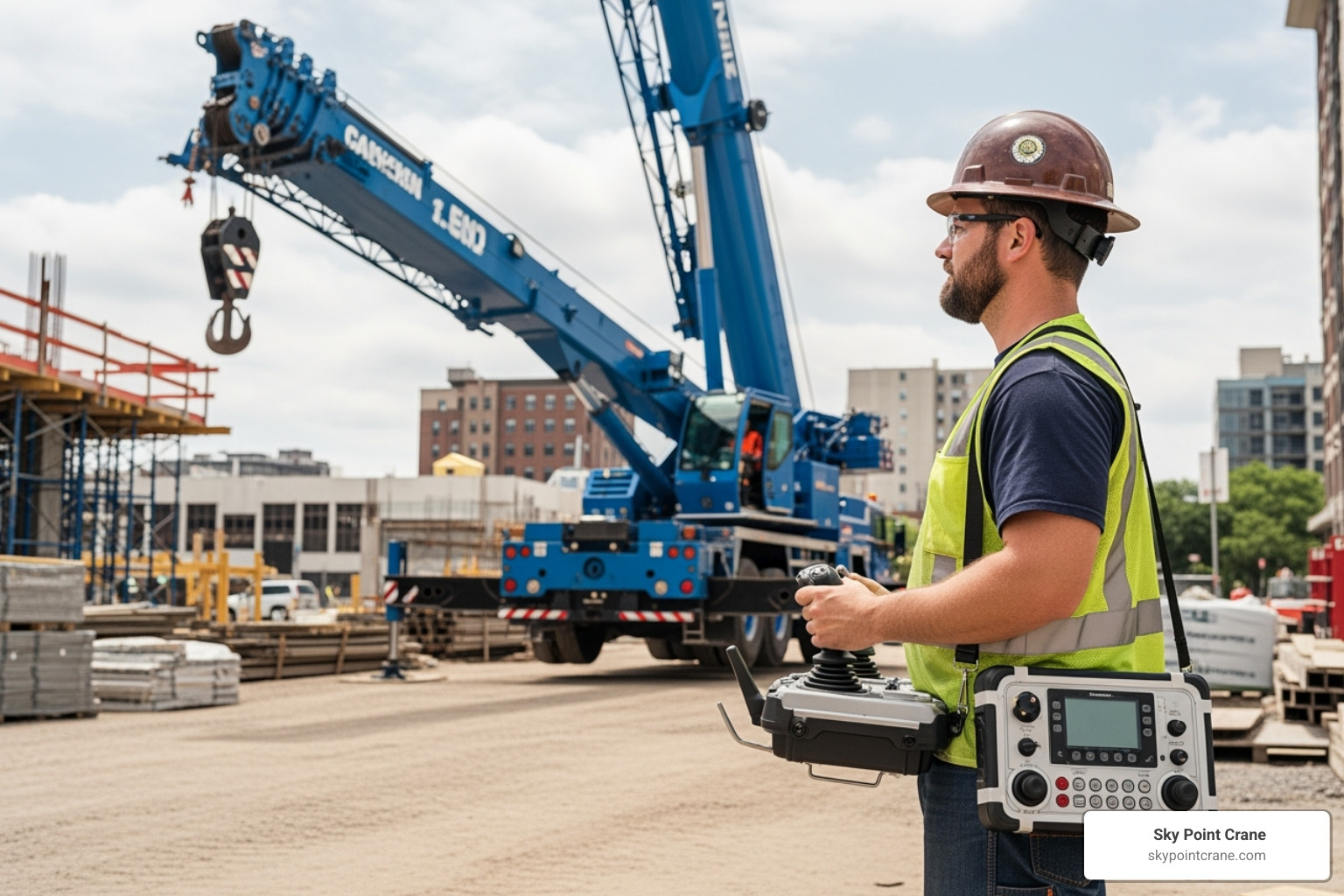
The knuckle boom truck crane industry is undergoing a technological revolution, changing these machines into smarter, safer, and more efficient precision instruments. The current pace of innovation is exciting, genuinely changing how we approach lifting operations.
Innovations Driving Performance and Safety
Modern knuckle boom truck cranes are packed with intelligent technology:
- Remote Connectivity (Telematics): Allows fleet managers to monitor location, usage, and maintenance needs remotely, enabling proactive service and improved productivity.
- Advanced Control Systems: Features like Crane Tip Control simplify complex maneuvers by allowing operators to move the crane tip directly with a single joystick.
- Improved Safety Systems: Overload Protection (OLP) and Automatic Speed Control (ASC) actively prevent operations beyond capacity and smooth crane movements to prevent load swing.
- Variable Stability Limit (VSL): This technology continuously monitors the truck’s stability, calculating safe working limits in real-time and often increasing lifting capacity when conditions permit.
- Semi-Automatic Folding (SAF): Saves significant time by simplifying the stowing process, often to a single lever operation, boosting efficiency on jobs with multiple lifts.
Market Outlook and Industry Growth
While popular in Europe for decades, North American adoption of knuckle boom cranes was initially slower. Today, technological improvements have overcome earlier limitations, and their versatility is widely recognized, making them invaluable tools.
The numbers tell the story. The boom truck market is projected to exceed $1.5 billion by 2024, with knuckle boom truck cranes driving much of that growth.
This increased adoption in North America is driven by complex urban projects, tighter job sites, and the need for efficiency. The ability to combine transport and lifting on one truck is a key advantage. While European market influence remains strong in innovation, North American manufacturers are adapting designs for local needs.
The key driver is the versatility factor; one crane can perform multiple roles, which is essential for modern, efficient job sites. We see this demand across our service areas in Pennsylvania, Ohio, West Virginia, and Maryland, where these cranes handle jobs that once required multiple pieces of equipment.
Frequently Asked Questions about Knuckle Boom Cranes
Contractors and project managers often have similar questions about knuckle boom truck cranes due to their unique characteristics. Here are answers to the most common inquiries.
Do you need a special license to operate a knuckle boom crane?
Yes, proper certification is required. For construction work, OSHA regulation 29 CFR part 1926 mandates that all knuckle boom truck crane operations be performed by NCCCO (National Commission for the Certification of Crane Operators) certified operators. A standard commercial driver’s license is not sufficient. The operator needs specialized training on load charts, stability, and safe procedures. At Sky Point Crane, all our operators are NCCCO certified, ensuring safe, expert handling of the equipment. Learn more about our certified rigging and signal persons who complete our professional teams.
What attachments can be used with a knuckle boom crane?
The ability to use a wide range of attachments is what makes a knuckle boom truck crane so versatile. Common attachments include:
- Pallet Forks: For efficiently moving palletized materials like bricks, shingles, or drywall.
- Grapples: To provide a secure grip on irregular materials like logs, brush, or demolition debris.
- Clamshell Buckets and Augers: Buckets move loose materials like sand and gravel, while augers add drilling capability for setting poles or posts.
- Winches and Man Baskets: Winches offer versatile lifting, and certified man baskets provide safe access for personnel working at height.
Specialized tools like brick grabs and rotators further improve precision. The ability to quickly switch attachments allows one crane to perform many jobs on a single site.
What are the main limitations of a knuckle boom crane?
While incredibly versatile, it’s important to understand their limitations to ensure you choose the right equipment.
- Lifting Capacity: A key limitation compared to larger cranes. While powerful, they are not designed for the super-heavy lifts that larger mobile or tower cranes handle.
- Reach and Height Restrictions: Their maximum reach and height are often less than that of large telescopic boom cranes, which may be better for very tall buildings or long-reach lifts.
- Complex Maintenance: Their sophisticated hydraulics and multiple joints require regular, specialized attention, which can lead to higher maintenance costs than simpler designs.
- High Operator Skill Requirement: The multi-jointed boom is challenging to master, requiring a high level of skill and experience. This is why we invest in NCCCO certified operators.
Despite these limitations, their advantages are significant for the vast majority of lifting tasks. The key is matching the right crane to the right job.
Your Partner for Complex Lifting Solutions
This guide has highlighted the remarkable capabilities of knuckle boom truck cranes, which blend power and precision. Their true value lies in solving real-world problems, from navigating tight urban alleys to placing materials on multi-story buildings, making challenging jobs manageable.
The versatility across industries like construction, logistics, and utilities explains why the boom truck market is projected to exceed $1.5 billion by 2024, representing countless projects completed more efficiently and safely.
At Sky Point Crane, we see how the right knuckle boom truck crane transforms projects. Our NCCCO certified operators leverage their experience and the crane’s advanced technology to ensure every lift is safe and efficient.
When planning your next project in Pennsylvania, Ohio, West Virginia, or Maryland, a reliable partner is as crucial as the right equipment. We provide comprehensive crane services, 24/7 availability, and a commitment to safety that delivers peace of mind.
The future of lifting is articulated, and we are ready to help you harness its power for your most complex challenges.