
Heavy Duty Bucket Truck Options for Massive Projects
Essential Features of a High Reach Bucket Truck
When we talk about a high reach bucket truck, we aren’t just talking about a standard cherry picker with a longer ladder. These are highly engineered aerial devices designed to maintain stability while extending workers nearly 13 stories into the air. To handle these “massive projects,” several core features must work in harmony.
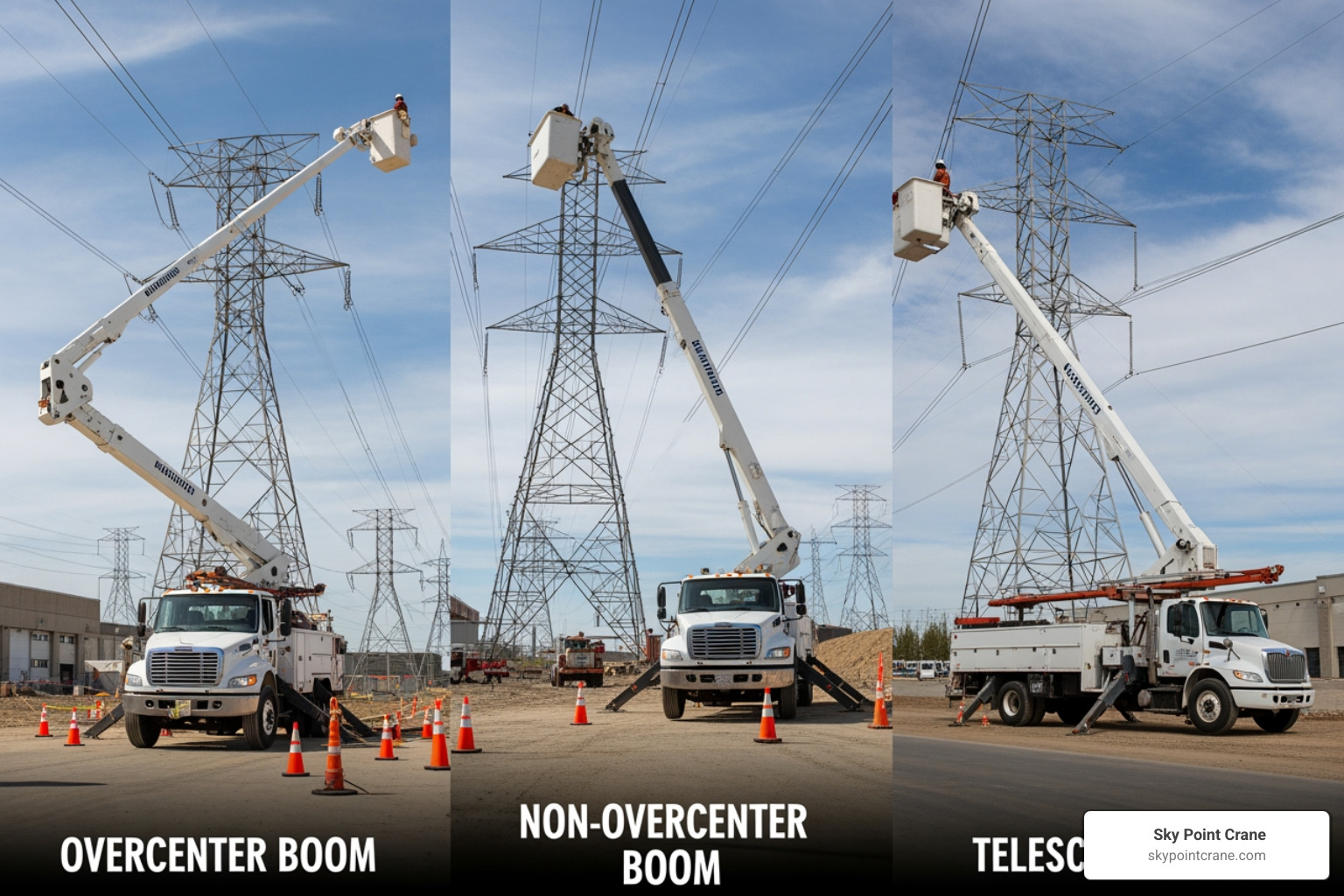
High Reach Bucket Truck vs. Standard Models
The primary differentiator is, of course, the vertical and horizontal capability. While a standard utility truck might service residential power lines at 40 or 50 feet, a high reach model is a “transmission aerial device.” These are the heavy hitters of the fleet.
Standard models often prioritize compact footprints for neighborhood streets. In contrast, high reach units like the Terex Hi-Ranger TL series are built for the massive scale of high-voltage transmission lines. They offer significantly higher side reach—sometimes over 60 feet—allowing operators to navigate over obstacles or reach across difficult terrain that the truck chassis cannot physically cross. For those managing complex sites in Western Pennsylvania or West Virginia, this extra “reach-out” is often more critical than the “reach-up.” You can learn more info about boom truck with bucket services to see how these specialized units bridge the gap between standard buckets and heavy cranes.
Boom Designs: Overcenter, Non-Overcenter, and Telescopic
The “backbone” of any high reach bucket truck is its boom design. Understanding these is vital for project planning:
- Telescopic Booms: These operate like a telescope, extending straight out. They are prized for their simple operation and are often found in all telescopic bucket trucks used for high-speed reach.
- Overcenter Booms: These allow the upper boom to travel “over center” relative to the lower boom. This provides incredible versatility, allowing the bucket to reach the ground or work at angles that would be impossible for other designs.
- Non-Overcenter Booms: These models, such as the Terex Hi-Ranger Non-Overcenter Lifting Bucket Trucks, are the gold standard for many utility transmission jobs. They offer massive working heights (up to 125 feet) and are designed to support setup and maintenance on the same side of the truck, which is a huge advantage in tight right-of-ways.
Many high-reach units utilize an articulating telescopic design. This combines the “knuckle” of an articulating boom with the reach of a telescopic section. These booms are often constructed from filament-wound fiberglass, providing the necessary insulation for live-line work while keeping the weight low enough for the chassis to handle.
Key Specifications for High Reach Operations
Selecting the right unit requires a deep dive into the spec sheet. If you underestimate the weight of your crew and tools, or the distance you need to reach horizontally, the truck’s safety systems will simply prevent the lift from happening.
| Feature | TL80 | TL100 | TL80/112 |
|---|---|---|---|
| Max Working Height | 80 ft | 100 ft | 112 ft |
| Max Side Reach | 47.2 ft | 61.9 ft | 63.3 ft |
| Platform Capacity | 700 lbs | 700 lbs | 700 lbs |
| Material Handling | 2,000 lbs | 2,000 lbs | 2,000 lbs |
| Insulated? | Yes | Yes | Yes |
Understanding these numbers helps avoid the “hidden” costs of renting the wrong equipment. For a detailed breakdown of what to expect financially, check out more info about bucket truck rental costs.
Working Height and Side Reach Benchmarks
It is a common “rookie” mistake to confuse platform height with working height. Working height is generally calculated as the platform height plus six feet (the height of the worker and their reach). If your project is at 100 feet, an 80-foot truck won’t cut it.
The high reach bucket truck category typically starts at 80 feet. Models like the TL100 provide a 100-foot working height, while the TL80/112 pushes that to 112 feet. For the most extreme applications, certain non-overcenter aerials can reach 125 feet. Horizontal reach is equally vital; for example, the TL100 offers nearly 62 feet of side reach. This allows you to park on a solid road surface while reaching out over a ditch or steep embankment to service a pole. For projects across the varied terrain of Ohio and Maryland, this flexibility is a lifesaver. You can find more info about truck with lift bucket rentals to see which reach best fits your specific site.
Platform Capacity and Material Handling Features
High reach doesn’t mean low capacity. Most heavy-duty models feature a two-man bucket with a 700 lb capacity. This allows two technicians to work together with their safety gear and hand tools.
Furthermore, these trucks often act as mini-cranes. Many are equipped with a material handling jib and winch. For instance, the TL series can lift up to 2,000 lbs using a side-mounted jib. This is essential for lifting transformers, cross-arms, or heavy insulators into place. To ensure precision, look for features like 180-degree platform rotators and continuous rotation, which allow the operator to position the bucket perfectly without having to reposition the entire truck.
Industry Applications for the High Reach Bucket Truck
These machines are the workhorses of critical infrastructure. From the rolling hills of Central Pennsylvania to the urban centers of Pittsburgh, they keep the lights on and the skyline growing.
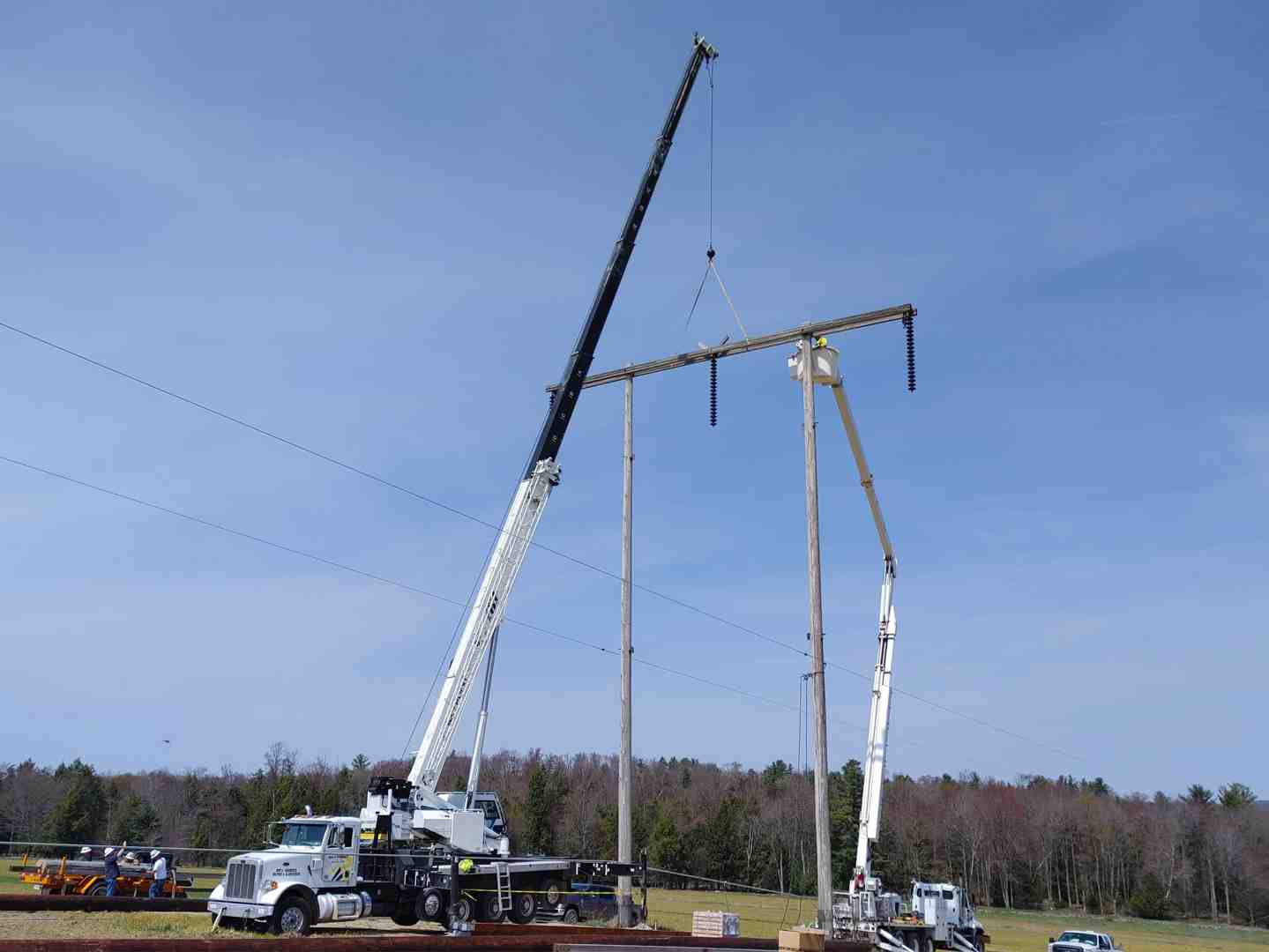
Utility Transmission and Distribution
The most common home for a high reach bucket truck is in the electric utility sector. Transmission lines are significantly higher than standard distribution lines, often requiring heights of 80 to 120 feet for maintenance.
These trucks must meet strict safety ratings, such as Category B or C insulation per ANSI A92.2 standards. This ensures the boom can withstand high voltages, protecting the workers in the bucket and on the ground. Substation aerials are also used within power plants and substations where vertical reach is needed to clear buswork and transformers. For more on these specialized utility lifts, see our more info about boom lift bucket truck rentals.
Forestry and Construction Projects
While utilities are the primary users, other industries rely on these “tall” solutions:
- Forestry: Large-scale tree trimming around transmission right-of-ways requires the extreme reach of a TL80 or TL100 to clear overhanging limbs safely.
- Construction: High-reach buckets are ideal for installing signage on high-rise buildings, lifting HVAC units to rooftops, or positioning roof trusses.
- Municipal: Bridge inspections and stadium lighting maintenance often require heights that standard buckets can’t reach.
For smaller-scale urban needs, some contractors look for more info about boom lift bucket van rentals, but for the big stuff, the truck-mounted high reach is the only way to go.
Safety Standards and Operator Requirements
When you are 100 feet in the air, safety isn’t just a policy—it’s a lifeline. Operating a high reach bucket truck requires more than just a driver’s license.
- Certifications: All bucket trucks must conform to ANSI A92.2 standards. Operators should be NCCCO certified or have equivalent documented training that includes classroom instruction, hands-on practice, and a formal evaluation.
- OSHA Compliance: OSHA 1910.67 dictates specific rules for aerial lifts, including the mandatory use of fall protection (full-body harnesses and lanyards) the moment the bucket leaves the cradle.
- Stability: High reach lifts exert massive leverage on the truck chassis. Outriggers must be fully extended on solid ground, often using outrigger pads to distribute the weight. Most modern units include interlocks that prevent the boom from moving unless the outriggers are properly set.
- Daily Inspections: Before every shift, operators must check hydraulic fluid levels, look for leaks in the boom hoses, test emergency ground controls, and inspect structural components for cracks.

Rental and Purchase Considerations
Whether you are looking to rent for a one-off project in West Virginia or add a unit to your permanent fleet in Ohio, where the truck comes from matters.
Major manufacturers like PALFINGER and Terex have significant US footprints. For example, PALFINGER’s Oklahoma City facility serves as a central hub for North American production, ensuring that trucks are built to regional standards and American craftsmanship. Similarly, Dur-A-Lift has been manufacturing truck-mounted lifts since 1969, focusing on heavy-duty customization.
Pre-Rental Inspection Checklist:
- Service Records: Always ask for the annual ANSI inspection report and recent maintenance logs.
- Tires and Chassis: High reach units are heavy. Check for tire wear and frame integrity.
- Hydraulic Systems: Look for “weeping” hoses or sluggish boom movement, which could indicate a pump or seal issue.
- Insurance and Fees: Be wary of “hidden fees” like environmental surcharges or excessive delivery costs. Ensure you understand the damage waiver—most exclude “gross negligence” like boom damage from overloading.
Frequently Asked Questions about High Reach Lifts
What is the difference between working height and platform height?
Platform height is the distance from the ground to the floor of the bucket. Working height is an industry-standard estimate that adds 6 feet to the platform height, accounting for the reach of a person standing in the bucket. If you need to touch a wire at 100 feet, you need a 100-foot working height (which is a 94-foot platform height).
Do I need a CDL to operate a high reach bucket truck?
Generally, yes. Most high reach bucket truck models are mounted on heavy-duty chassis (Class 6, 7, or 8) with a Gross Vehicle Weight Rating (GVWR) exceeding 26,000 lbs. While some smaller models like the Hi-Ranger LT40 Bucket Truck are designed for non-CDL use, they only offer heights around 45 feet. For “high reach” projects (80ft+), a CDL is almost always required.
What are the most common red flags when renting a bucket truck?
Red flags include missing safety decals, hydraulic oil puddles under the machine, “creeping” booms (where the boom slowly lowers on its own), and rental companies that cannot provide an operator’s manual or current inspection stickers. If the equipment looks neglected, the internal safety systems likely are too.
Conclusion
A high reach bucket truck is an indispensable tool for the massive projects that power and build our region. Whether you are maintaining high-voltage lines in Maryland or erecting steel in Western Pennsylvania, the right equipment ensures the job is done safely and on schedule.
At Sky Point Crane, we specialize in more than just equipment; we provide comprehensive lifting solutions. From 3D Lift Planning that visualizes your project before the first outrigger is set, to providing NCCCO certified operators who prioritize safety above all else, we are your partners in success across Ohio, West Virginia, and beyond.
Ready to elevate your next project? Explore the complete guide to bucket truck rentals or contact us today to discuss your specific high-reach needs.